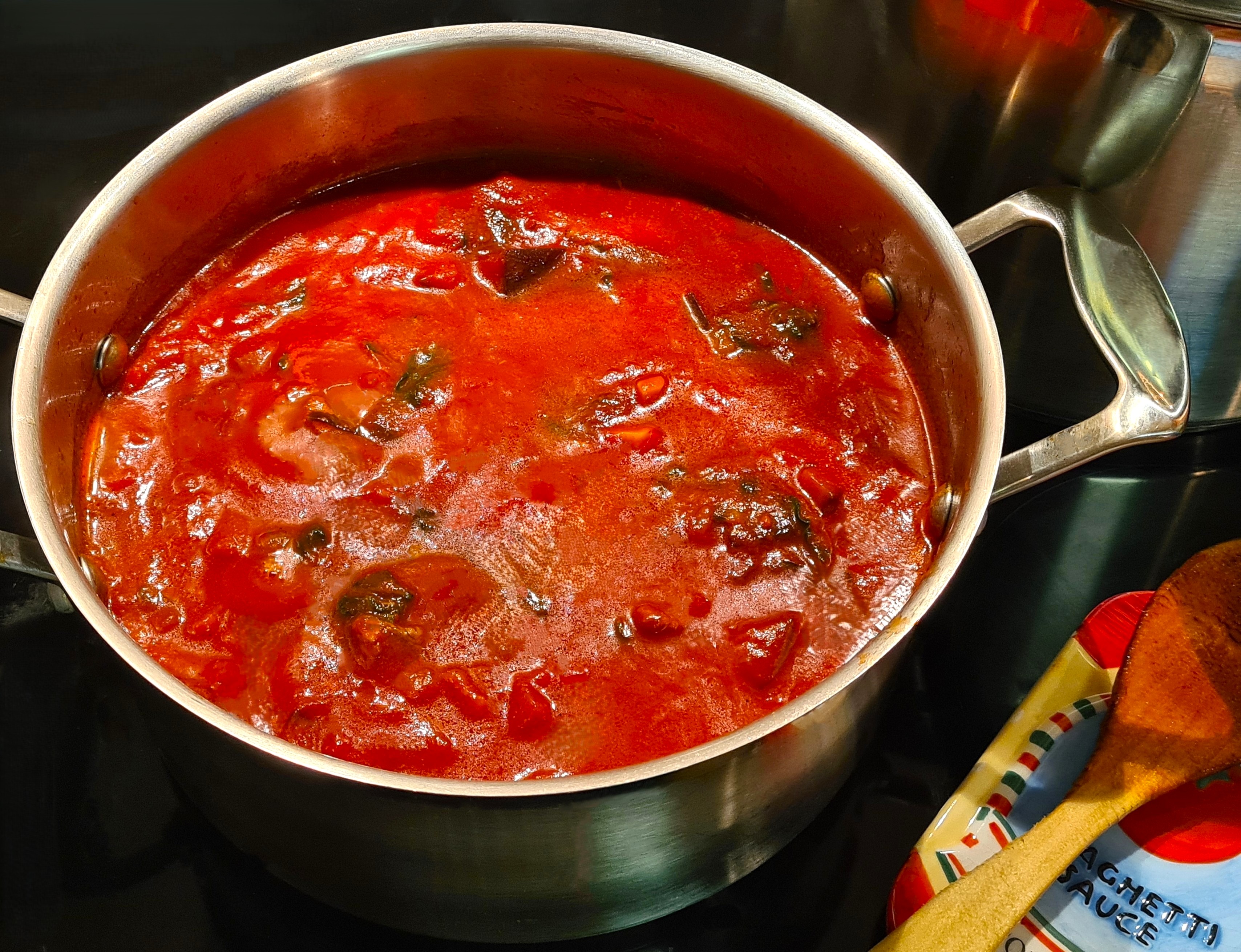
 First pasta sauce for the year (now the freezer shelf is bare of the last container from the previous batch – so many dinners from one pot!)
Each time the recipe ends up a little different, but for this one there is…
- Passata for past ‘tomato days’ when three generations made the sauce together.
- Olive oil – a symbol of peace and the heart of Italian food.
- Onion for the layers of life (and tears shed).
- Garlic for health and protection from the Malocchio (evil eye).
- Bietola, silverbeet for nourishment and connection to the land.
- Chuck steak for strength (and a link to as a kid I had to carry home that paper-wrapped parcel from the butcher shop up the road back to Nanna Francesca’s kitchen).
- Diced and crushed tomatoes for passion and the blood of independence.
- A dash of balsamic vinegar for patience (and quality, slow craftsmanship over fast mass production).
- A teaspoon of sugar for love, generosity and the sweetness of life.
- Salt for the sea of southern Italy (and the tide to go out in the pot).
- A handful of lentils for good fortune and a prosperous year ahead.
Hopefully, I haven’t forgotten anything but the next one will have its own story anyway. Buon appetito. 🍝 ✨
– – – – – –
❤️ Anche… my heart goes out to all those in southern Italy and its surrounding areas recovering from the devastation of the cyclone at present. Including the seaside town of Palmi where Nanna Francesca’s side of our family is from (and where I wrote about in, The Proxy Bride). Auguro a tutti voi forza, cuore e coraggio. Zoë xx
 On the kitchen table today… pickings from the garden – ginger flowers, white periwinkles that self-sowed in a cement crack, a spotted blackberry lily from a lovely friend’s cutting, a native, blue flax lily, the bleeding heart (was one of Grandma Lorna’s favourites), tiny, yellow flowers from bok choy gone to seed, even a cobbler’s peg flower.



 On the kitchen table today… poppies! I happened to see these when I was getting groceries and couldn’t resist picking up a bunch. At once they made me think of being in Abruzzo in spring and seeing the hillsides covered in these flowers growing wild.
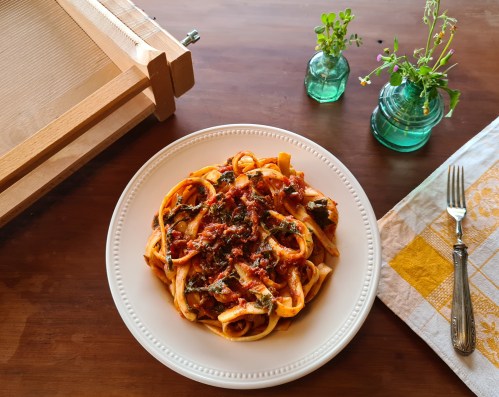 After some thought, the recipe I couldn’t go past is, Maccheroni alla chitarra with wild greens. I’ve known this dish from when I was a little girl, have cooked and eaten it in both Italy and Australia and it has ties to my Abruzzo ancestry going back more than 600 years. It’s also a lovely connection to Bisnonna Maddalena and Nonno Anni recalling her foraging for wild greens on hillsides around Fossa and carrying them in her apron back to the kitchen. (‘Maccheroni’ is the original Abruzzese name used for this dish, while in Italy’s north where maccheroni is a short pasta, it’s called ‘spaghetti alla chitarra’.)
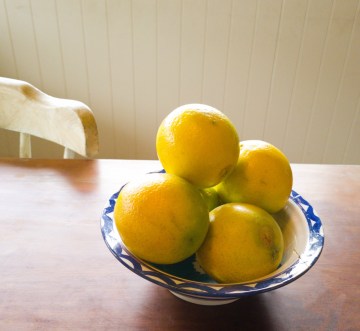 On the kitchen table today… lemons from my neighbour’s tree. No, I didn’t steal them. 😄 My Italian neighbour often kindly shares some lemons from his backyard tree. His mother, now in her nineties, who also lives next door, is from Sicily and gave me a tip years ago that when frying polpette she’d place a lemon leaf under each one and they’d impart a lemon flavour into the meatballs.
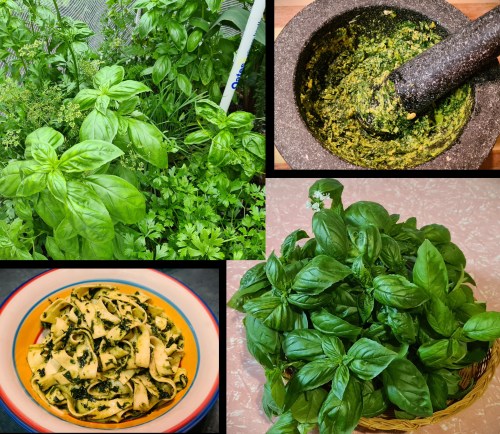 Left to themselves, the basil and parsley I planted when summer began have been relishing the rain and heat and are on a rampage to take over the vegie patch in the backyard. No fertiliser or pesticides, just tucked under the protection of netting propped up by an old mop handle (a nod to Nonno Anni!)


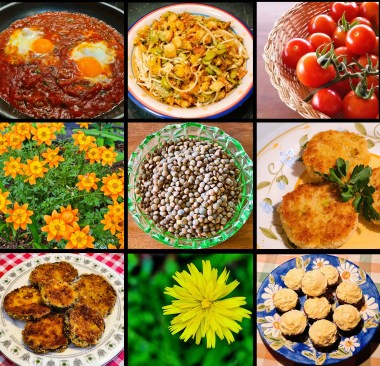 Spring circles in the kitchen and garden – eggs in purgatory, ‘lucky’ lentils, broad bean risotto fritters, a dandelion flower, melanzane fritte, orange patty cakes, fava spaghetti with spring greens…
 Recently, my cousin, Carlo (on Granny Maddalena’s side), who lives in Italy, revisited the area of our ancestors in Abruzzo and sent me these photos of pallotte cacio e ova that he’d cooked for the first time. His mother used to make this dish and our shared nonni in Abruzzo would make it too in times past.
 In recent weeks, I’ve had some unexpected serious health news with a bit of a cancer scare. It’s all happened quite swiftly and following numerous tests, I’ve had abdominal surgery, been in hospital and am now back at home in what I’m told will be a six-week recovery. I’m extremely relieved and grateful to say that it was caught in time, I am in the clear and recovering well so far.
 On the kitchen table… fennel flowers, their little blossoms like star bursts with a slight scent of liquorice, honey and lemon. I came across some fresh fennel bulbs at the market about a month ago but life has taken over for a bit since then! These fennel were irresistible in their curviness. (Male fennel are slimmer, the female fennel more rounded and sweeter – said to be ‘like the many beautiful, curvy women of the Mediterranean shores these plants are indigenous to’!) 😘
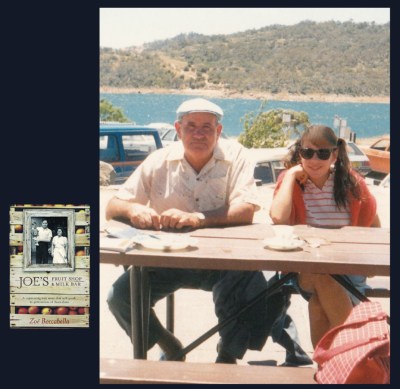 It was actually Nonno Anni who originally gave me the idea for, The Proxy Bride. When I was talking to him about his life for Joe’s, he mentioned by chance that during WW2 when he and other Italian men were taken from farms around Stanthorpe and sent to internment camps, the women and children suddenly left alone did it very tough. He later heard they were given no assistance and with curfews and restrictions weren’t allowed to drive, many didn’t know how to use the farm equipment or ride a horse and faced poverty and starvation. He mentioned this group of women who banded together to keep their farms going. That really struck me and I felt I’d come back and write about it. When I learnt that some of these women were also proxy brides, it opened up more to the story.
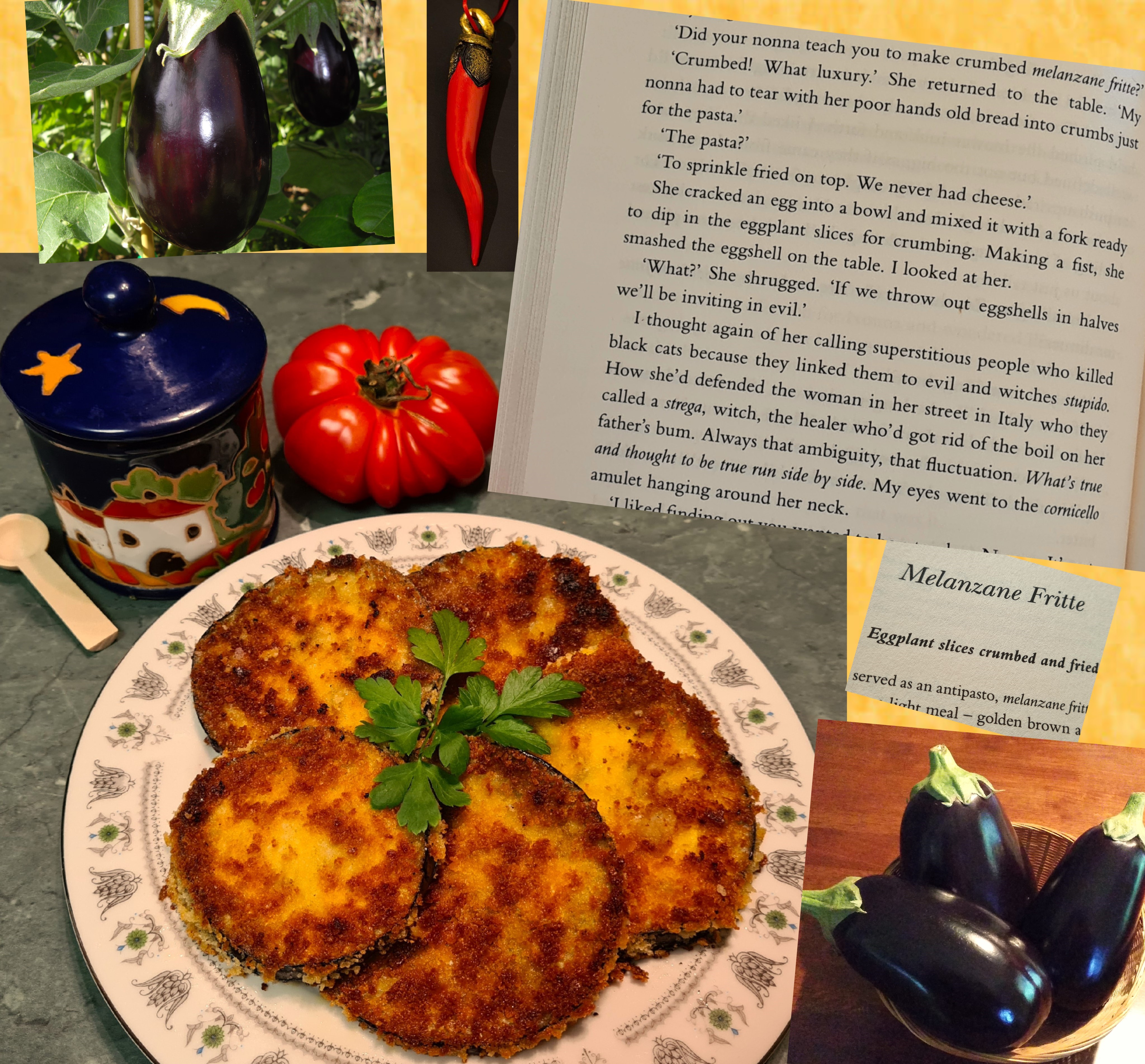
 Melanzane fritte – made with eggplants from the backyard vegie patch, just like the crumbed, fried eggplant slices that Nonna Gia and Sofie cook together in, The Proxy Bride. I’ve put these ones on one of Nanna Francesca’s plates and next to them is a little pot I bought in Italy to stand in as a ‘chilli pot’ (though I confess mine has salt in it at present!)
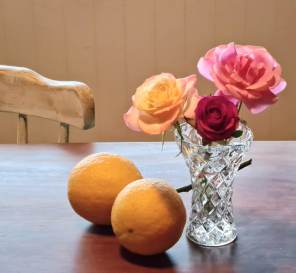 On the kitchen table today… roses and lemons from a friend’s garden. (With glorious fresh, crisp and sweet musky scents!) The vase came from Nanna Francesca’s ‘good cabinet’ and was a bonbonniere from a 1970s or 80s Italian wedding. (Some will remember those!) It’s
 On the kitchen table today… a friend’s home-grown lemons and mandarins on one of Nanna Francesca’s 1950s dinner plates. So lovely when someone brings you fruit and flowers they’ve grown in their garden. To me they’re the perfect gifts. (And the fresh, crisp lemon scent currently in the kitchen is divine!) 🍋
 Zoe xx
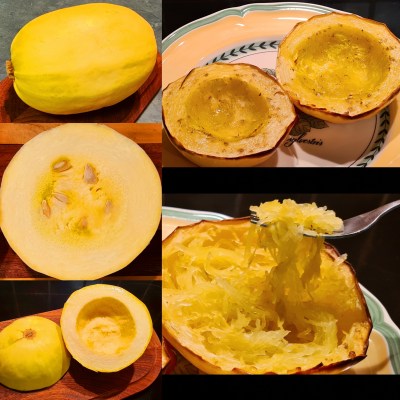 Spaghetti squash… a sunny winter vegetable. It grows on a vine like pumpkin and has yellow, star-shaped blossoms that only open for one day. Love how, once tender, you can gently fork the strands from the sides to create spaghetti in its own bowl.
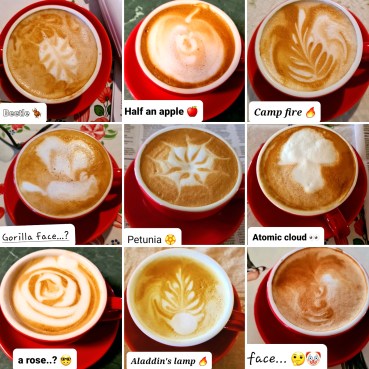 Verso buoni finali e buoni inizi! To good endings and good beginnings (and good coffee too!) What a time it is at present. “Mamma mia!” as Nanna Francesca would say, while Nonno Anni would likely raise his hands, palms up, as if all we can do is get on with it as best we can.
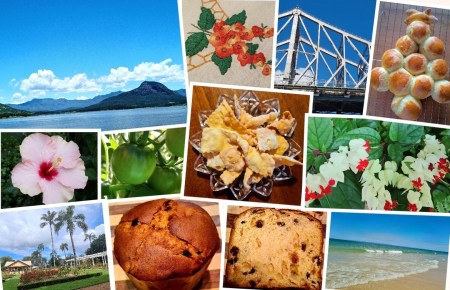 Thank you for joining me here throughout the year! Many of you have been here with me for a decade now and it’s a joy to connect with you through stories, cooking, gardening, old photos and of course, Italy. I’m very grateful to you all! The festive season for me has so far been a short ‘holiday at home’ with (mostly) big, blue skies, gardening, swimming, park picnics, cooking, catching up with those I can, and missing those I can’t. As always, the ‘bleeding heart’ vine is flowering right on time in Christmas (and Italian!) colours of red, white and green. There is panettone, Roger’s Xmas tree bread rolls and my cousins made lovely crostoli.
 …focaccia with tomatoes, asparagus and parsley, nasturtiums, rosemary and chives from the vegie patch. A joint effort between Roger and me this time (he being the bread baker, me the gardener). My focaccia decorating skills didn’t turn out quite as pretty as I’d hoped – and one tray copped the hotter side of the oven – but sprinkled with olive oil and salt and eaten while still warm, that didn’t seem to matter in the end! Buona Domenica!
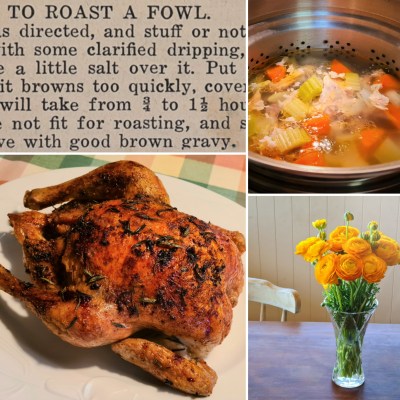 ‘Gallina vecchia fa buon brodo’ – an old hen makes good broth as the Italian saying goes, for it brings age and experience in the magic of food being medicine and comfort. (A good quality, free range chicken who’s led a pleasant, kind life in the outdoors and lived a bit longer is good too.) It’s been a while since I’ve roasted a whole chicken and made broth, something Granny Maddalena did as one of her remedies as the village witch. (Her chicken soup was said to cure her son, Elia from typhoid when a doctor couldn’t.)
 Winter circles… kitchen, garden, lovely moon and of course, coffee (thanks to Roger’s barista skills!) It’s the best time for my favourite type of slow and oven cooking and the dishes pictured include (top right) ricotta gnocchi baked in the pan and (bottom left) a serpente of mushrooms and wild greens (but the snake got away on me a bit!)
 It’s usually feast or famine in my garden and while I’ve always wanted to be one of those people who have lots of magnificent flowers growing, it seems they never bloom much and then move on to the next life.
  The perfect thing to make when it’s cool and rainy outside, warm and cosy inside. Schiacciata al rosmarino e pomodori. A hearth bread like focaccia (except this time made in the oven not a fireplace!) 💛🍅🌿
 Last of the summer basil… in mid-autumn – time for basil pesto! I grew up with southern Italian cooking and so came to this dish from the north a bit later on. There are so many variations but I’ve tried to make it as close as I can to the original Ligurian version using basil, pine nuts, garlic, olive oil and Parmigiano Reggiano.
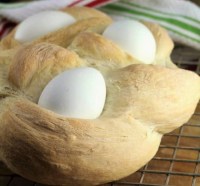 Colomba cakes are mostly bought and Nanna Francesca used to make a more modest Easter bread with hard-boiled eggs baked into it. This year I broke with tradition and made an ‘Easter lasagne’ for the family. It has been a rainy day so it seemed the thing to cook.
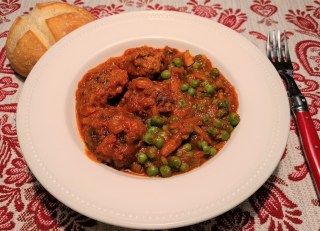
 Polpette and peas in gravy, such an ‘Australitaliano’ combination – meatballs and peas in tomato sauce. Comfort food at its best. Nanna Francesca cooked this a lot (and when I was a kid, I found it a bit confusing that, being southern Italian, she called the tomato passata or sugo – ‘gravy’ considering my Australian Mum called gravy a deep-brown liquid accompanying a roast). Nanna Francesca would’ve been 95 today so it seems fitting to cook her polpette e piselli in gravy. We always celebrated her birthday on the 12th, the day she was born though the official date on her birth certificate was the 19th (lodged late as her parents argued who to name her after). Tradition won, as did her father, and being the first-born, Francesca was named after her paternal grandmother.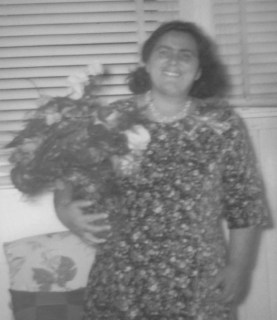
 Nonno Anni told me when he received an orange for Christmas during his childhood in the 1920s, he treasured it. I knew he and his Mum were poor and village life in Italy was hard at that time, especially with his father far away in Australia to seek work, but an orange… I couldn’t quite believe it when I found this out as a child in the 1970s and oranges were so easy to get then. But fresh oranges were considered treasures before refrigeration and faster transport. Especially at Christmas considering that since ancient times, oranges have been said to bring joy, good luck and to ward off evil. (What must Nonno Anni have thought once he had a whole display of oranges at his fruit shop and milk bar!)
 If I’m honest, Christmas isn’t always the easiest time for me as it feels bittersweet with the happiness of those present mingled with the quiet of those unable to be or now gone. But food is so special in that certain dishes can trigger those lovely memories of people dear to us no matter how long it may be since we’ve seen them and this year, I feel happy that oranges can bring that little bit of sunshine.
 Warmest wishes and thank you for your lovely support and messages throughout the year. May 2020 be filled with light and some happiness no matter what else it may bring! Wishing you tante belle cose – many beautiful things, Zoe xx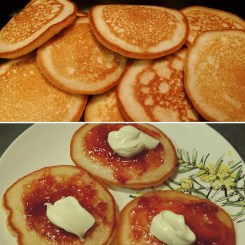
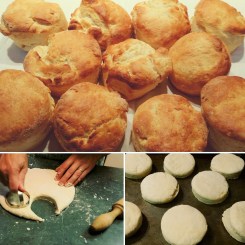 These lovelies are some baking treats from having more time in the kitchen of late (and there’s been some fiascos as well as triumphs, I admit!) Roger is the scone baker in our house so gets credit for these. He likes following set recipes, while I’m more of a ‘bit of this and that’ cook, assessing as I go. The last time I baked scones was in a school ‘home economics’ class where the teacher said my hands were too warm for the dough (cool hands are better so scones aren’t tough apparently).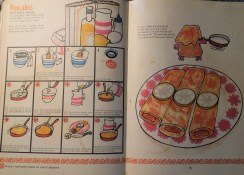

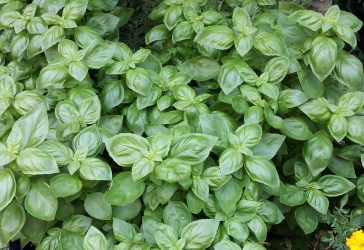
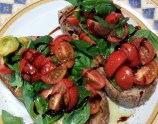
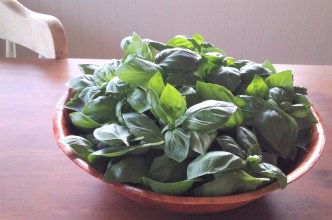 Amazing how a much longed-for pour of rain a few days ago has brought about a basil forest in the vegie patch! So, it’s all things basil for a bit with this beautiful harvest… homemade pizza with basil, tomato and mozzarella, basil pesto with orecchiette and crispy prosciutto, as well as bruschetta with basil, tomato and balsamic. (Any other ideas for basil are most welcome. As is a little more rain all round for everyone in Australia!) And I have to say that Costa


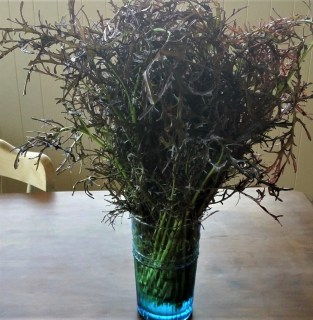 The mysterious… spigarello, this ancient, Italian, wild green that seems also called cima di rapa, cavolo broccolo, getti di Napoli, spigariello and mistero nero. Some say it’s part of the broccoli family, others dispute it. I found this bunch at a roadside stall in southeast Queensland hinterland, a long way from southern Italy where for centuries women have picked and gathered into their upturned aprons this bitter green from the mountainsides.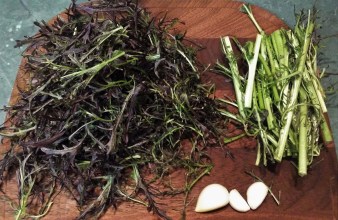


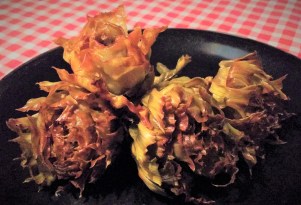
 Vale Margaret Fulton (1924-2019).


 Granny Maddalena harvesting from her vegie garden before going inside to cook for all the family. Sometimes it’s the simplest things…
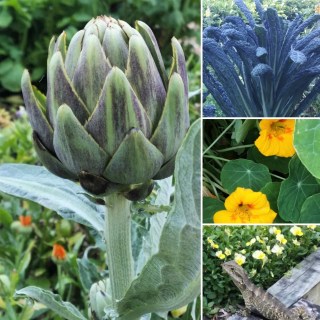 Some lovely, spring, vegie patch colours…
 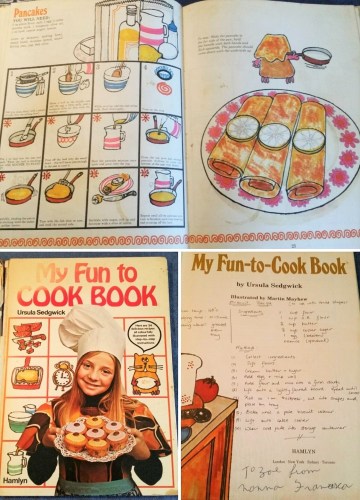 Came across my first cookbook, given to me when I was five by Nanna Francesca (signed ‘Nonna’ while I called her ‘Nanna’ in our Italian/ Australian tussle). My favourite pancake recipe pages are still splotched and dusty with flour!



 I love cooking from old cookbooks for their connection to the past and family recipes.
 This is one of the first photographs I chose that I hoped would make the cover of Mezza Italiana (it’s on the back). Taken in the 1960s, it was dinner for my uncle’s birthday and one of the rare times the family got to eat together since one of my grandparents were usually doing a shift at their milk bar.
 A little while ago I mentioned some wood-smoked chillies that I’d bought from a roadside stall. I’m going to use some as a bit of a twist on pasta arrabbiata.
 Making pasta alla chitarra just as my Abruzzese great-grandmother, Maddalena used to make. The shoebox-sized wooden box strung with steel wires must be ‘tuned’ like a guitar (chitarra). A sheet of pasta is laid over the strings and pressed through with a rolling pin, slicing it into strips. And the pasta sauce is like the ‘gravy’ Nanna Francesca cooked (with a few extra greens I added!)

 The first carnations are in bloom in the backyard and have a lovely scent…
 Usually we end up eating most of these picked straight from the tree in the backyard but perhaps this year some might last long enough to cook with…
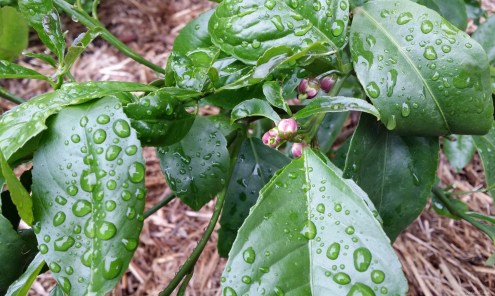 Chatting over the fence my Sicilian neighbour, who is in her eighties, recommended to put a lemon leaf under polpette (those Italian slightly egg-shaped meatballs) when frying them in olive oil in the pan – not necessarily to eat the leaf but for it to impart flavour during cooking. I haven’t tried that yet however seeing these fresh young leaves I might need to give it a go.
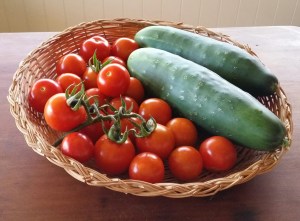
 When I came across cherry tomatoes selling cheap a little while back, I couldn’t resist. This was my mini ‘tomato day’, well, couple of hours, not with all the family but just me, and not to make passata but to make ‘sun-dried’ cherry tomatoes.
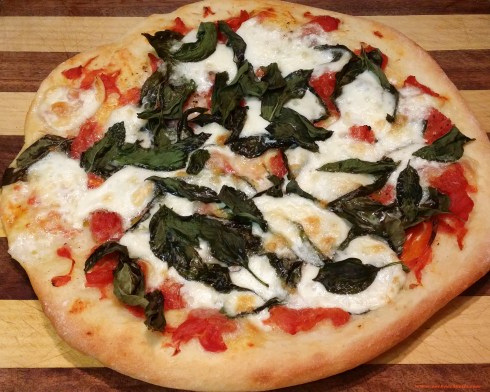 Time for an Italian classic…a take on Pizza Margherita.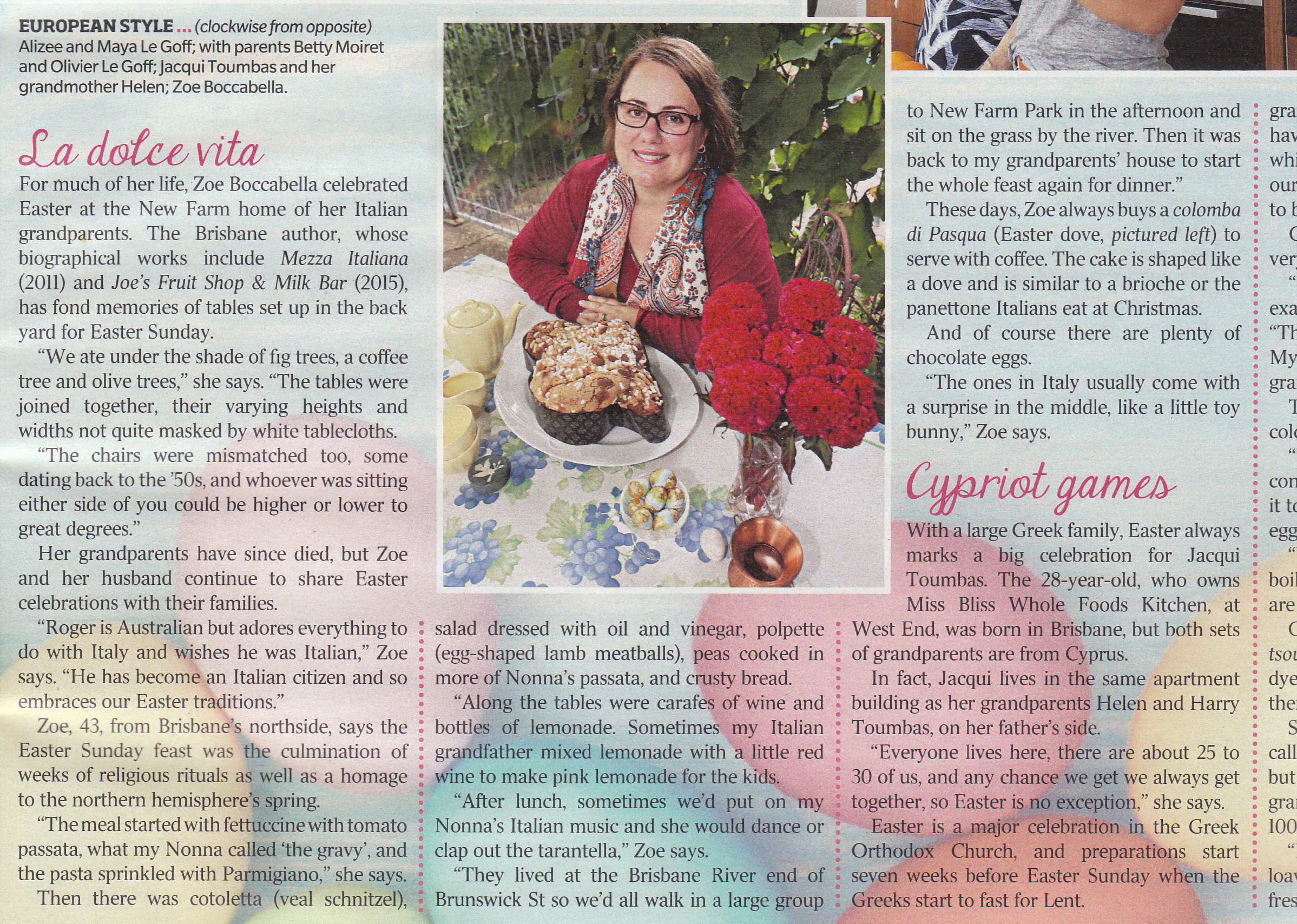
 From the Isabella vine that grows over the pergola, some of the grapes harvested this year (in one of Nanna Francesca’s salad bowls circa 1960s/70s.) Each year the grapevine yields enough to make about half a dozen bottles of wine…a modest, homemade vintage but a tiny bit of Italy in an Australian suburban backyard.
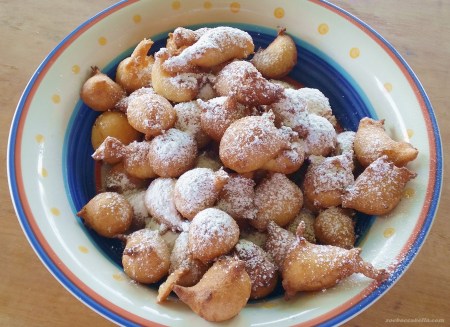 Time for some Italian Christmas treats… these poco zeppole {zippoli} are flavoured with citrus zest and Boronia Marsala {yes, the bottle with the little horse and cart on the label for those in the know}.
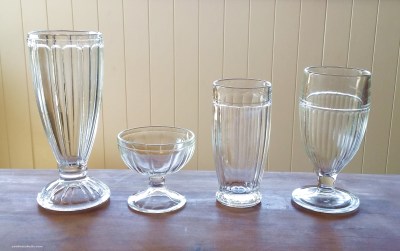 Original, circa 1950s glassware from Nonno Anni and Nanna Francesca’s milk bar… milkshake glasses, the glass for the homemade orange drink and the bowl used for ice cream sundaes and fruit salads.
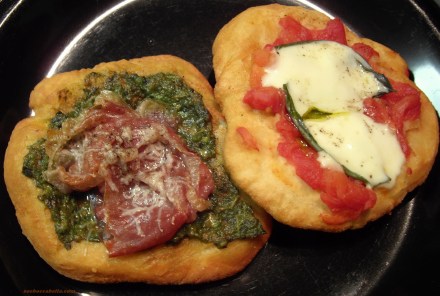 A decadent version of little pizzas with the fluffy dough fried then oven-baked – pizzette fritte. {Apparently, considered the way pizzas were first made.} They are very light and if made well in the traditional way, should not absorb the olive oil.
 An original glass {circa 1950} from Nanna Francesca and Nonno Anni’s milk bar. These were mostly used for my grandfather’s sought-after, homemade orange drink but customers would also request milkshakes in them too if they preferred glass to one of the metal canisters.
 Traditional lasagne, for me, is in the same category of favourite, comfort food as a good, old-style hamburger with the lot. {Perhaps a reflection of an Italian-Australian upbringing!} I learned to make lasagne when I was about 11 or 12, and must have made hundreds over the years.
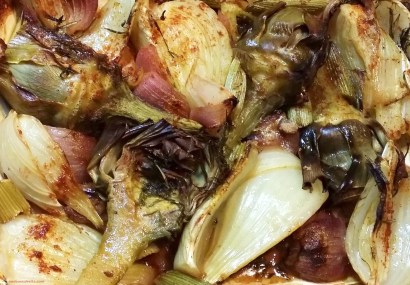 Slow-roasted artichokes, fennel and red onion… perhaps not as pretty as when in their natural state {see link below} but a little more tasty. These I roughly chopped to similar sizes and slow-roasted for about an hour drizzled with olive oil, balsamic vinegar, and a sprinkling of salt, brown sugar, smoked paprika and rosemary leaves.
 …beautiful shapes and colours. Thought I might try these three together for a different take on roast vegies…
 So many traditional Italian dishes were created by combining leftovers, which I love as I can’t stand wasting good food by tossing it out. And while I know I would definitely not be the first to try this, it was a happy discovery when faced with some leftover prosciutto to fry it, sprinkle it and taste for the first time – basil pesto orecchiette with crispy prosciutto.
 Each day the peas in the vegie patch are getting plumper and I can’t wait until they are ready to be picked, not that any will make it to the pot. Since childhood, I’ve loved fresh peas straight from the garden. And peas seemed to have worked their way into both my books: Nanna Francesca, her mother and grandmother in Calabria, sitting on their balcony overlooking the sea, shelling peas and feeling the breeze as lightning licked the horizon… And the pea patch Nonno Anni grew in his New Farm backyard in my childhood… Even now, though both my grandparents are gone, when I look at my own, much smaller, pea patch, I’m reminded of happy memories being a child among their pea plants that were taller than I was – my own little forest. Winter sun warm on my shoulders as I would make my way along the rows, eating the peas, my grandparents not far away…
 Home-baked focaccia with rosemary from the garden and Australian-grown garlic and olive oil. Although I had a very brief knead of the dough, the credit all goes to Roger for this one. A lovely way to eat it is to make tramezzini by slicing the focaccia in half, spreading the inside of each piece with basil pesto and then for the filling, adding pieces of grilled haloumi, slices of barbecued eggplant marinated in olive oil, ripe tomatoes, a handful of rocket, roasted capsicum and thinly-sliced, roasted pumpkin.
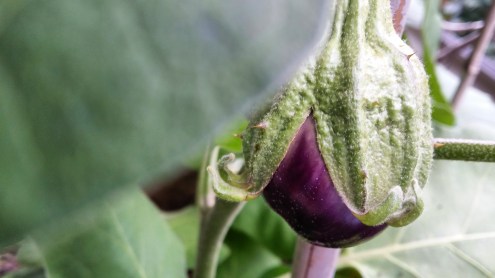
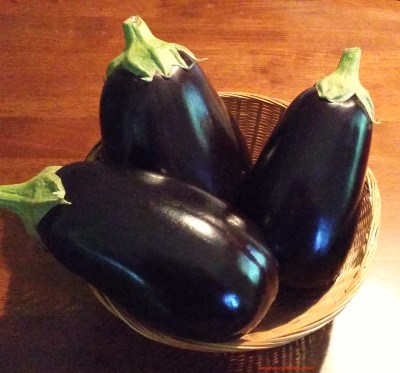 The two eggplant bushes must be very happy in their spots in the vegie patch (despite their relative lack of attention!) Picked these three beauties this morning and there are many more growing. Looks like it will be eggplant parmigiana cooking in our house this weekend. Might also grill some sliced melanzane on the barbecue and bottle it in olive oil too…
 I had never tasted this before but decided to make it anyway. Sliced fennel, orange segments, a drizzle of olive oil and some salt may sound like a curious combination of flavours but I was pleasantly surprised. Delicious on its own or great accompaniment to slow roasted lamb.
 For my Great-Granny Maddalena’s frittata, the main ingredients were eggs, some salt and flat-leaf parsley. She also used a lot of olive oil (her frittata never stuck to the pan!)
 My Italian grandmother made these all the time so I thought it fitting to serve them on one of her Florentine, painted wooden serving trays on the terrazzo table that sat on my grandparents’ patio for decades.
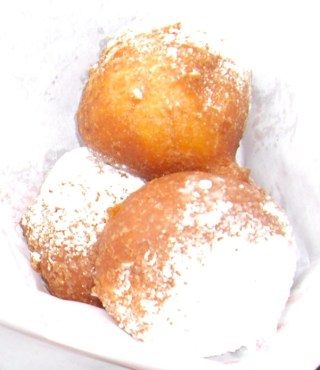 These little doughnut balls are also known as zippoli, zeppole or sfingi in Italy depending on the region where they are cooked. (I’ve also tasted the German version quarkbällchen – known too as ‘Bavarian snowballs’ – from a roadside stall not far from
  On a Sunday afternoon walk, we discovered mulberry trees growing wild along the creek and were not the only ones who picked the berries – the largest, plumpest and sweetest we’d come across in ages. Almost half an hour later the trees were still heavy with fruit, plenty left to share with others, the birds and flying foxes. That night Roger made mulberry pie with crumbly, buttery shortcrust pastry for supper. A little bit of ‘Sunday afternoon’ to last throughout the week…
 Saw these sweet, baby capsicums at the market and couldn’t resist buying them, though I wasn’t sure how I was going to cook them. Decided to stuff the capsicums with a mixture of seasoned goat’s cheese, pine nuts, parsley and basil, then bake in the oven. Served with some crusty bread on the side…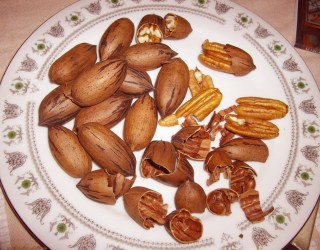
 It is claimed that arancini originated in Sicily as far back as the 10th century. The balls of rice with various fillings are shaped, crumbed and fried, resembling an orange – the Italian for orange being arancia. (Rice cooked the day before and cooled in the fridge works best.) In Messina, they can be more cone shaped, while in Naples they are pall’e riso (rice balls) apparently. I think ours (made 11 centuries later in Australia!) ended up being influenced a little by both cities.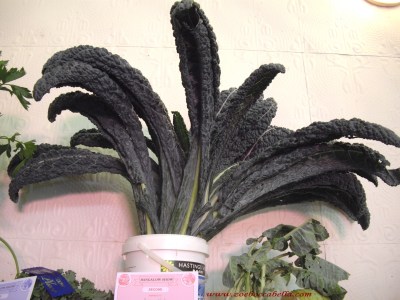
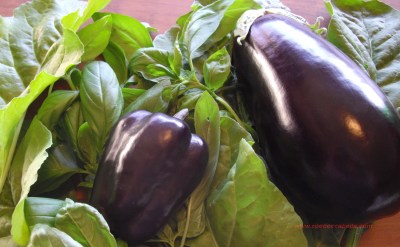

 So far about half a dozen at last count in the vegie patch. Every day I see them getting a little larger. I cannot wait to cook them and am trying to think of different recipes – eggplant parmigiana, crumbed slices fritte, melanzane involtini, stuffed eggplant, melanzane in passata…
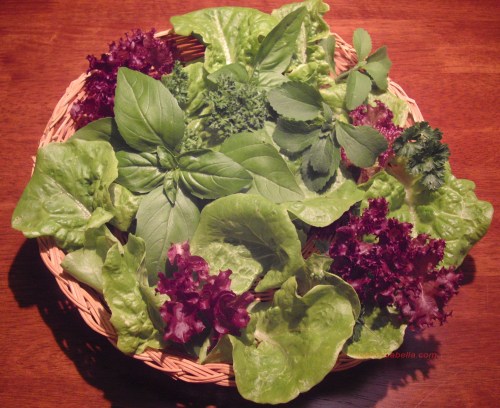 I know it’s a modest harvest yet I was thrilled to pick the first greens grown in our kitchen garden and make a salad for lunch with red and purple lettuce, parsley, basil and stevia leaves. I also added some cherry tomatoes (from the farmer’s market not the vegie patch, though I noticed the tomatoes I planted have some baby ones starting to form!)
 Pane Casereccio – delicious served warm – R made this Pugliese bread studded with salami and cheese, inspired after watching an old television series with Antonio Carluccio making it. I love how so many Italian recipes have been created to use leftovers.
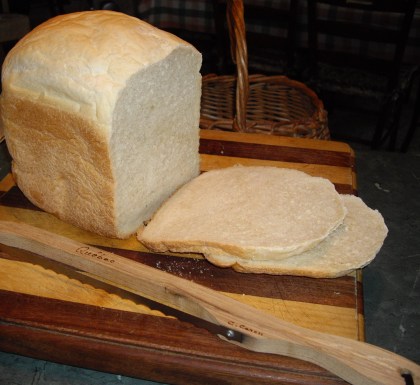 “…whenever the loaf is put on the table, few foods will produce such joy and delight in others as when freshly baked bread appears, the aroma of fresh memories rising with every slice, and all things – poetry and miracles, friends and family, food and love – for a short time are as they ought be: one.”
 At home when I was growing up, we sometimes ate eggs baked in leftover pasta sauce which we called, ‘eggs in tomato’, not quite as evocative as ‘eggs in purgatory’ that I later discovered this dish is also called.
 il bouquet perfetto for Valentine’s Day
 Caggionetti/calcionetti are traditional Italian Christmas treats particularly popular in Abruzzo (where my Granny Maddalena made them). They have a filling of almonds, walnuts, chocolate, chickpeas, lemon zest, cinnamon and honey enclosed in paper-thin ravioli casings fried in white wine and olive oil then cooled and dusted with icing sugar.
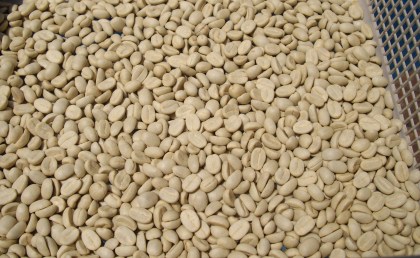 Next step in the coffee process – the beans (or seeds) from inside the coffee cherries have been washed and are now drying.
 It’s coffee harvest time again… these we picked from our backyard tree. Then, by hand, R extracted the beans from inside the coffee cherries and the beans are now spread out on wide sieves drying.
 It may not be the prettiest dish but the fried slices of eggplant rolled like crepes around prosciutto and mozzarella then baked with tomatoes, Parmigiano and basil tastes divine.
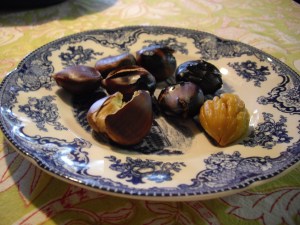 Autumn means chestnuts, castagne and I always think of my Italian grandfather, Nonno Anni whenever we roast them. In the Abruzzo in the 1930s, Nonno Anni harvested chestnuts beneath Gran Sasso, later taking them to turn to flour at the stone mill with the wooden water wheel on the canal below his village of Fossa.

 For many centuries, baking in most Italian villages took place mostly once a week or even a fortnight. Both my grandparents told me how they recalled the women of the village taking their dough to the forno (often the only oven in the entire village), and that each piece of dough had an identifying mark on it for when the women came back to collect their baked bread.


 Zoë Boccabella