
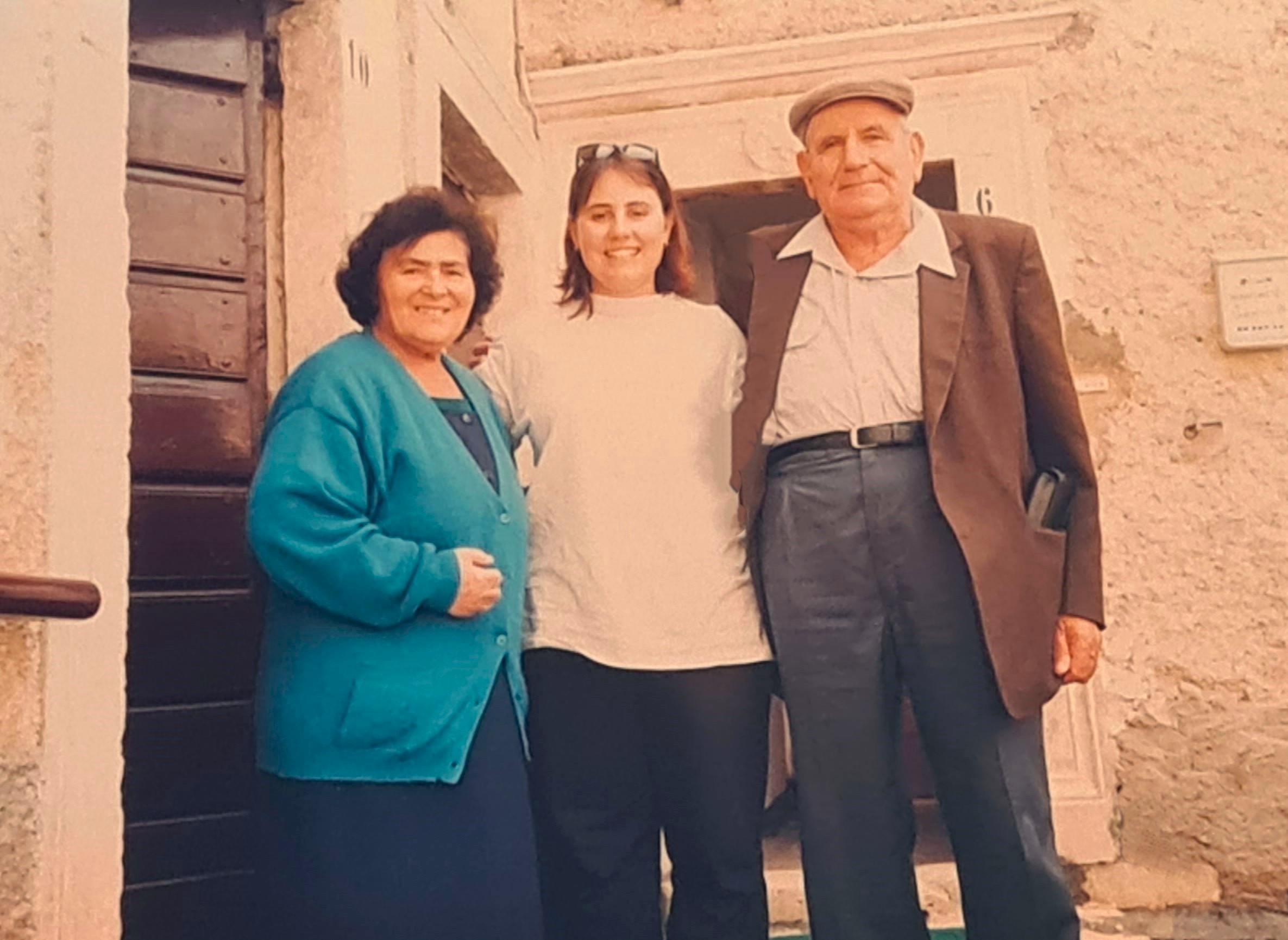
 Incredibly, it was thirty years ago this month that I first went to Italy and, in particular, Fossa. Little did I know then just how much that ‘returning’ for the first time to our family house in Abruzzo would come to change my life, and also my work.
This photo isn’t the best quality, taken back in the days of film cameras, but I cherish it. Nanna Francesca looks so happy. I’m a bit scruffy from backpacking around Europe for months but have ‘covered my legs’ after Nanna Francesca, scandalised that I’d arrived in the village wearing shorts, cried, ‘Madonna mia! Cover your legs. No one dresses like that here.’
As for Nonno Anni, seeing his face just catches my heart. Despite his appearing impassive, I can still see the emotion in his eyes that day and hear his words, ‘I’m so happy you’re finally here. The last of my grandchildren to come here. Now I can finally relax.’
How important it was for him that his descendants, while born on the other side of the world, would also know the indigenous land where they were from, where our ancestors could be traced back more than six centuries in that mountain valley in Abruzzo, and so have the blessing of both worlds.
I might’ve dragged my feet for lots of reasons the first time I returned, but by the next trip my heart was open, and I’ll be forever thankful for the love of these two people and for their keeping this connection. Who’d have thought when this photo was taken that this day would end up being in, Mezza Italiana many years later. I’m very grateful to all of you who’ve also ended up sharing this story with me over the years, thank you. ❤️🌠
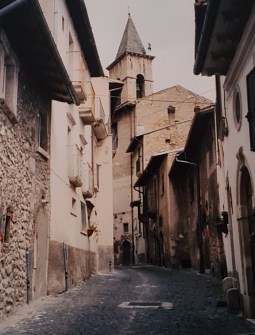
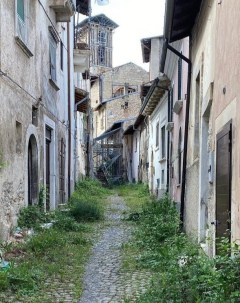 If you have any link to Abruzzo, I warn that this footage may be hard to watch as those filming go right into the most intimate parts of homes, which may just happen to be yours or of someone you know. That said, the young men filming have done so with respect, have only entered houses where the doors were already open and have concealed the name and whereabouts of the village. (Considering my own family’s house is one of those looted since the earthquake, I appreciate this.) By the end, they also appear to be overwhelmed by all they’ve seen.
 Came across this lovely tree when I was walking from the house in Fossa along the road to the village cemetery. It stands looking to the Aterno Valley and the Apennines in Abruzzo with Gran Sasso in the distance.

 With Nanna Francesca and Nonno Anni outside the family house in Fossa when I arrived there for the first time all those years ago (bearing in mind by then I’d been travelling and living out of a backpack for several months!!)
 This window in the small house in Italy, that has sheltered different generations of my family for centuries, is my favourite. It is the tiniest and gives a view out over the village of Fossa like peering from a cubby house. I also love that it shows how thick the stone walls are.
 My Italian grandmother made these all the time so I thought it fitting to serve them on one of her Florentine, painted wooden serving trays on the terrazzo table that sat on my grandparents’ patio for decades.
 Fossa house, Abruzzo, a decade ago… pecorino cheese made by two women on a farm down in the valley, olives from the L’Aquila market, cerasuolo wine from a nearby vineyard, the paisley tablecloth Nanna Francesca purchased from a travelling merchant who drove from village to village in his small truck full of wares, an Italian folk song blaring from speakers to notify buyers he had arrived.
 Came across this bio for Italian author, Giovannino Guareschi in one of my father’s original copies of the Don Camillo books published in the 1950s, and loved it.
 It is claimed that arancini originated in Sicily as far back as the 10th century. The balls of rice with various fillings are shaped, crumbed and fried, resembling an orange – the Italian for orange being arancia. (Rice cooked the day before and cooled in the fridge works best.) In Messina, they can be more cone shaped, while in Naples they are pall’e riso (rice balls) apparently. I think ours (made 11 centuries later in Australia!) ended up being influenced a little by both cities.
 …this 13-metre high sculpture of the ancient amulet,

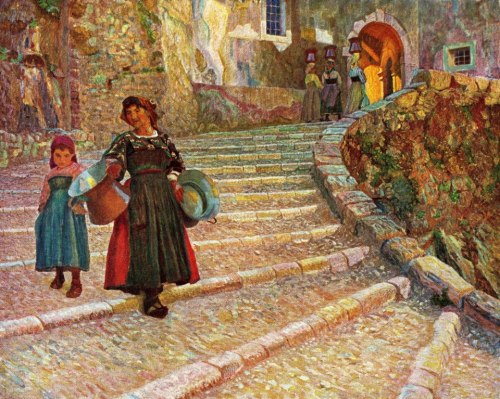 The woman in the foreground carries two conche, the copper vessels traditionally used in Abruzzo to collect water from the village fountain for the household. Perhaps she was teaching the young girl to carry it back on her head (depicted by the women in the background). The village women used to do so to transport all manner of heavy things with evidence of this including iron bedheads and, on occasion in very steep areas, even coffins.
 Pane Casereccio – delicious served warm – R made this Pugliese bread studded with salami and cheese, inspired after watching an old television series with Antonio Carluccio making it. I love how so many Italian recipes have been created to use leftovers.
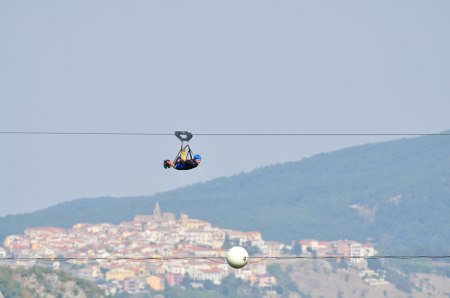 Il Volo dell’Angelo… {the flight of the angel} – something a little different to do in Italy – ‘flying’ between the villages of Pietrapertosa and Castelmezzano in the Dolomites of Lucania, Basilicata.
 Apparently, you start 1020m above the ground with the flight covering 1415m and reaching speeds of up to 120 km/h. Not sure if I’m game!
 I first learnt of this town when reading Old Calabria by Norman Douglas (published 1915), and on the map it looked a good halfway point to stay between Palmi and Pompeii. This part of the old town reminded me of some of the lanes in Fossa, (not so the 40 degree heat at the time) and even though it appears not to have changed much over the years, the town was quite different to the one Douglas had encountered about a century before when brigands were still imprisoned in the castle.
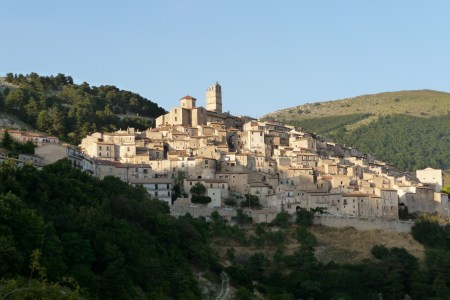

 Jeffrey Smart, 1921 – 2013.
 It’s ‘Giro time’ again in Italy at the moment. {4-26 May, 2013}
 The Maremma Sheepdog is indigenous to central Italy, particularly Abruzzo and the Maremma area in Tuscany and Lazio, and has been used for centuries by Italian shepherds to guard sheep from wolves.

 Caggionetti/calcionetti are traditional Italian Christmas treats particularly popular in Abruzzo (where my Granny Maddalena made them). They have a filling of almonds, walnuts, chocolate, chickpeas, lemon zest, cinnamon and honey enclosed in paper-thin ravioli casings fried in white wine and olive oil then cooled and dusted with icing sugar.



 Gargoyles, in their myriad forms include being carved to represent local heretics, controversialists, rogues, or personal enemies of the architect or building owner, particularly for ecclesiastical structures during the Middle Ages.
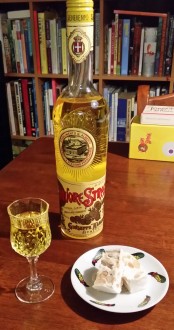 Perhaps because my great-grandmother Maddalena was known as the village witch, there is something that appeals immensely about Italy’s most prestigious national literary prize, the Premio Strega being named ‘the witch prize’. In 1944 , Maria and Goffredo Bellonci began hosting at their house in Rome, Sunday gatherings of writers and artists that became known as the Amici della Domenica, or Sunday Friends. This resulted in 1947 the Belloncis, together with Guido Alberti, owner of the Strega liqueur business, inaugurating a prize for fiction, the winner being chosen by the Sunday friends.
 It may not be the prettiest dish but the fried slices of eggplant rolled like crepes around prosciutto and mozzarella then baked with tomatoes, Parmigiano and basil tastes divine.
 This painting of Fossa in the Abruzzo is by artist Juan Alfredo Parisse, born in Buenos Aires, Argentina, and whose parents are from L’Aquila, Italy.
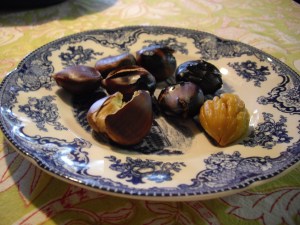 Autumn means chestnuts, castagne and I always think of my Italian grandfather, Nonno Anni whenever we roast them. In the Abruzzo in the 1930s, Nonno Anni harvested chestnuts beneath Gran Sasso, later taking them to turn to flour at the stone mill with the wooden water wheel on the canal below his village of Fossa.

 For many centuries, baking in most Italian villages took place mostly once a week or even a fortnight. Both my grandparents told me how they recalled the women of the village taking their dough to the forno (often the only oven in the entire village), and that each piece of dough had an identifying mark on it for when the women came back to collect their baked bread.
 This picture of young priests
 Piedmontese peasant wood-pipe carved from cherry wood that writer, artist and folklorist, Estella Canziani presented to The Folklore Society of London in 1911. She donated it along with other items from her travels in northern Italy when she wrote and illustrated her first book, Costumes, Traditions and Songs of Savoy (before she ventured to the Abruzzo in 1913 to pen Through the Apennines and Lands of Abruzzi).


