 Recently, I realised it’s been 15 years since I began my Facebook page (and I mentioned this there), but it’s since also occurred to me that I began this website at that time too – just after my first book was published (on an April 1st!!)
I was an absolute beginner regarding websites and social media. Too shy to advertise, I thought, well, if someone happens to find their way here and might like to stay, then that’s great! It was such a thrill to see when people began to come here and to also leave messages.
Some of you have joined me from the beginning and I’m truly grateful for your loyalty and sharing this space with me. Some of you have come across this space more recently – it’s wonderful to have you here. Thank you to all of you who stay and sign up to receive these emails, or also seek me out on my Facebook or Instagram pages.
It’s a joy to hear your thoughts, shared memories and stories, either through the comments or by private messages. Some of which bring a lovely laugh, others that are so very touching. I totally understand too those quietly watching on. In my own life, I’m a pretty private person and it’s fairly quiet much of the time with my days (and some nights) mostly at my desk writing.
Otherwise, I’m cooking, swimming, or in the garden, or gathering stories, research and interviews for the next book, which can take me to different places. It’s often a slow process as I do it all on my own, but there’s always another book in the works and I truly appreciate your patience while I’m working on it.
I usually write here if perhaps something occurs, or I delve into the box of old photos. (If there’s ever something you’d like to read about let me know. I’ll see what I can do!) In the years since I began this website and social media my life has changed in many ways, as likely my posts have too, but they’ll always be from me in all their swerves and ramblings – never ‘generated’ from elsewhere.
Thank you again for being a part of this small community and your interest in the books. For your loyalty, curiosity and shared experiences. My one hope when I started this website and my social media pages was for these to be places of kindness, shared respect, stories and sincerity and I can say that in 15 years this has been the case between us all and that is truly such a wonderful thing! Grazie, baci e abbracci, Zoe x
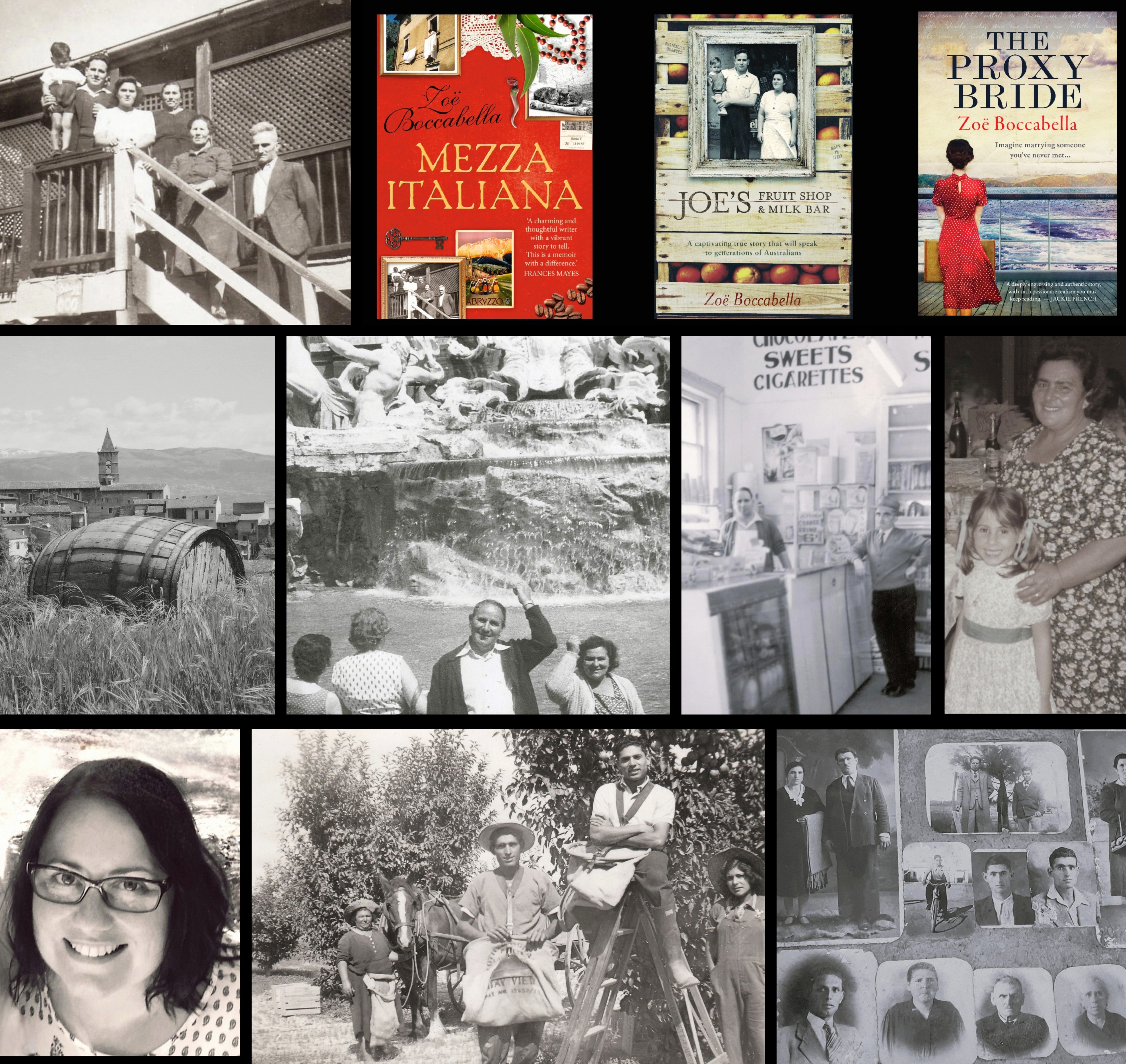
P.S. So love that photo of Nanna Francesca and Nonno Anni throwing coins in the Trevi Fountain fifty years ago!! xxx
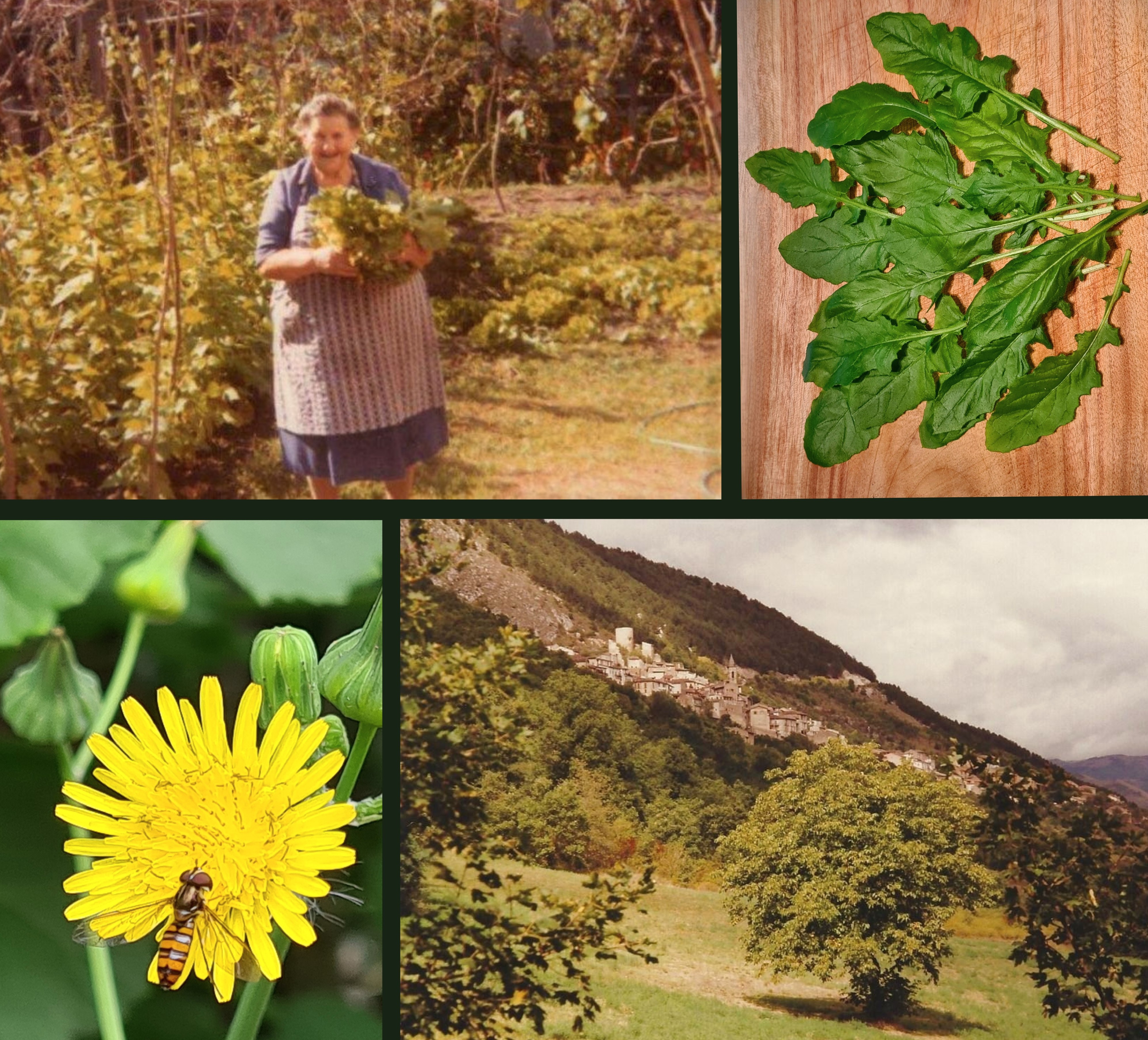 Sometimes Australia can feel very far from Italy and other parts of Europe where my family are from, yet at times, the distance and years can fall away in a moment. This morning, I noticed dandelions have sprung up in the backyard and decided to pick some of their fresh, young leaves for lunch. (Nothing fancy, just to add to a sandwich among other salad greens.) Unexpectedly, this simple foraging in the backyard with sunshine on my back also brought a warmth of connection. Not only to the garden but to great-granny Maddalena and the hillsides near Fossa in Abruzzo where she’d forage for greens and carry them home in her apron. (How different her life must’ve felt when she emigrated to the other side of the world aged forty-eight!)
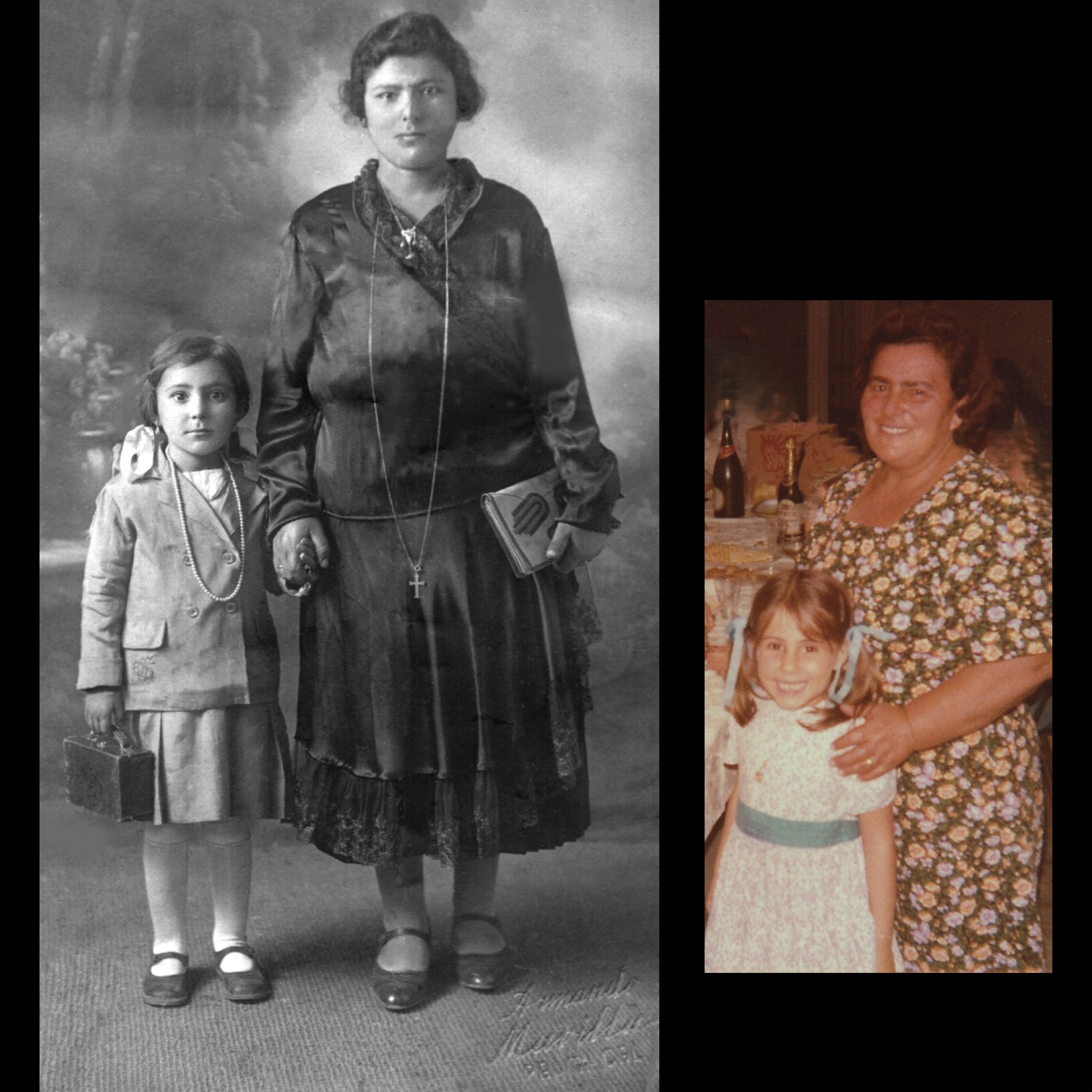 Nanna Francesca when she was a little girl standing with her mother – and me as a little girl standing with Nanna Francesca. It just happens we were both the same age as little girls when these photos were taken and, by chance, I’m now the same age Nanna Francesca was in her photo with me.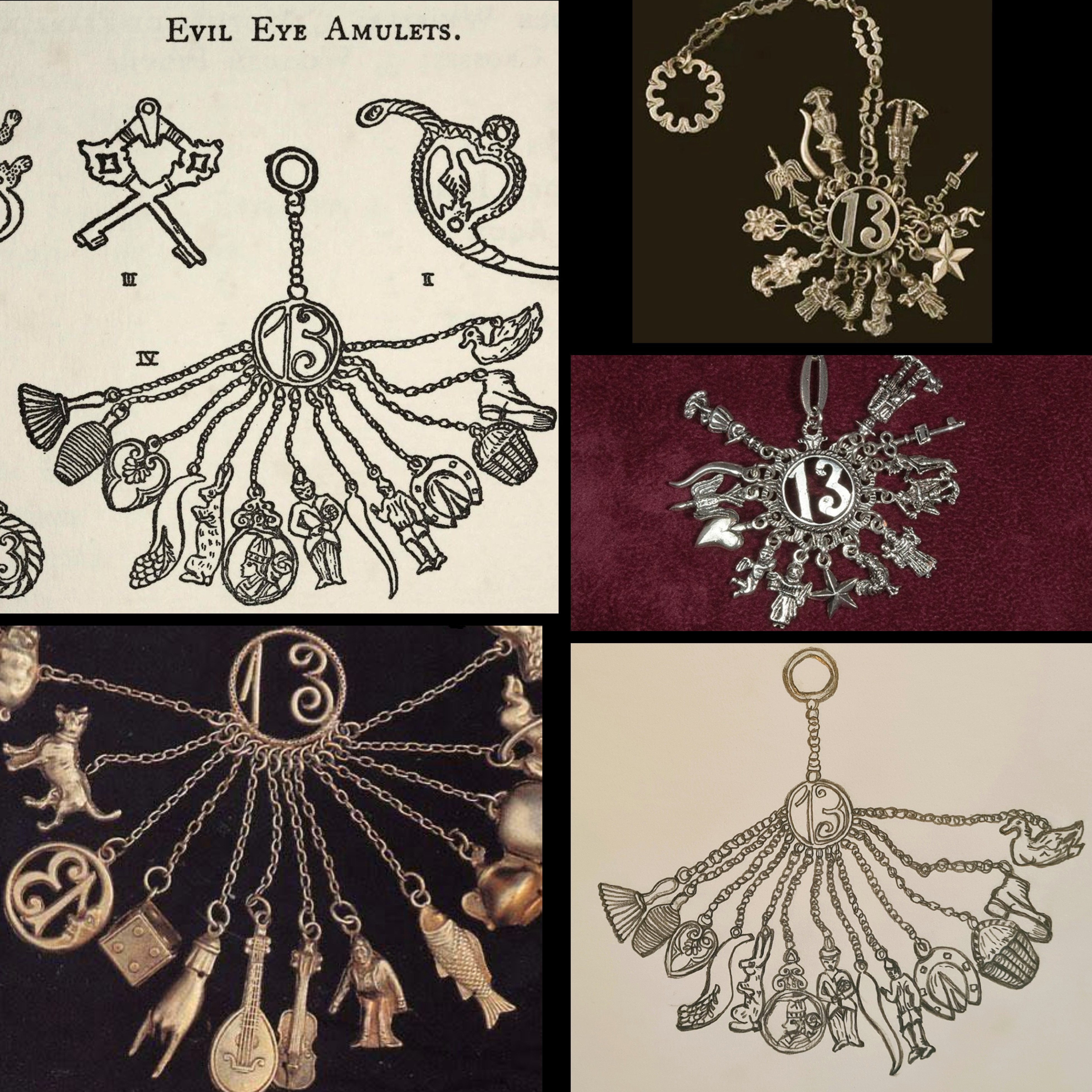
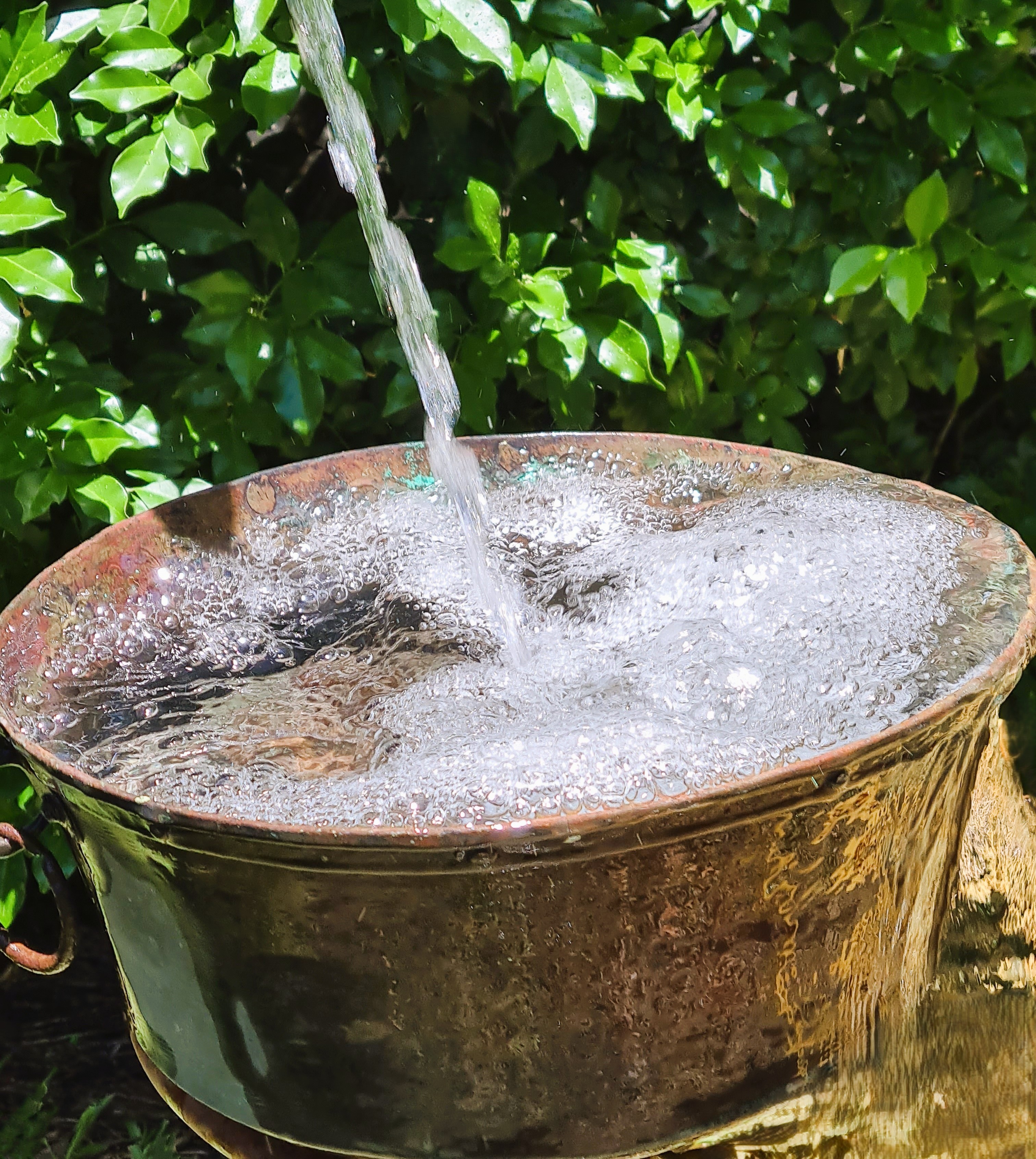 Years ago, when it wasn’t common to have running water at home in Abruzzo, on the first day of a new year, women would go to the village fountain to collect clean water in their copper conca or basin and take it to friends and neighbours as a gift.
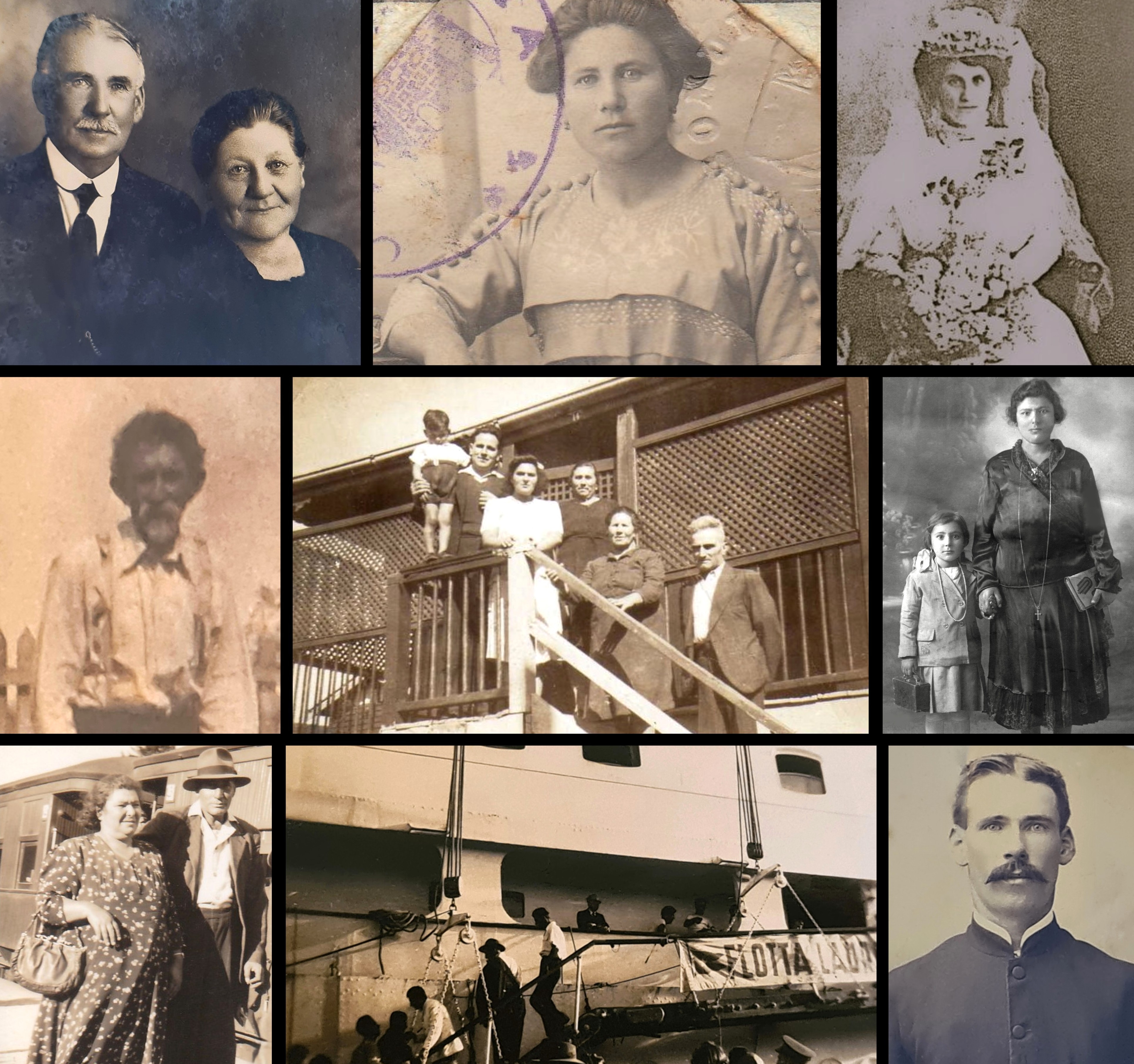 Whether it be from my past books or as I continue learning of and writing new stories for the next book, one thing that keeps showing itself over and again is that migration has many stories and different faces, even just in my own family –
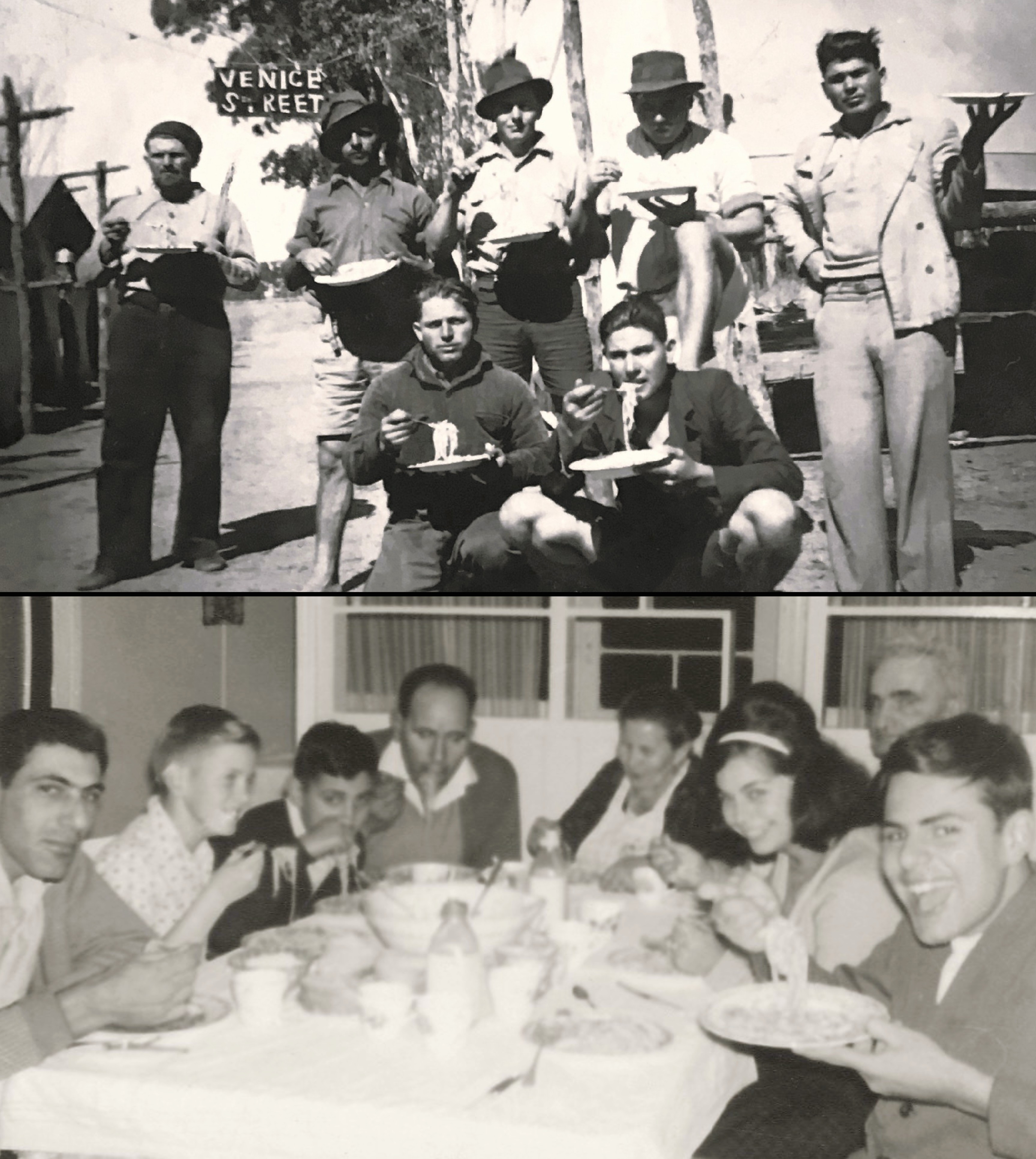 An incredible thing happened recently… I’m working on the next book, in particular, a part of it that’s an update on the internment camp Nonno Anni was in, when out-of-the-blue, I’m contacted by someone whose father was in the same camp. (The secret camp authorities said never existed, though any of us who had family in there know that’s not true.)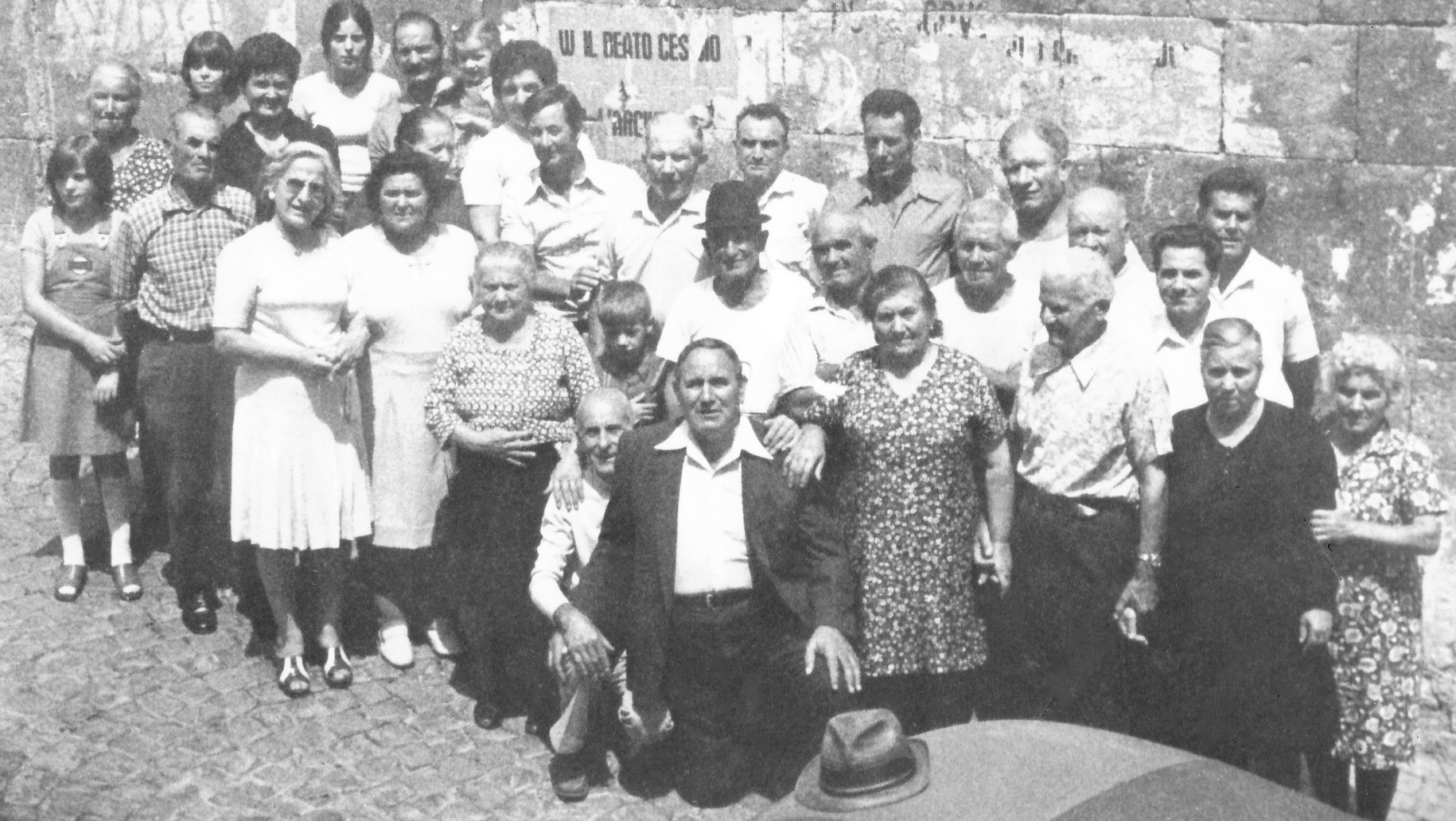
 On the kitchen table today… pickings from the garden – ginger flowers, white periwinkles that self-sowed in a cement crack, a spotted blackberry lily from a lovely friend’s cutting, a native, blue flax lily, the bleeding heart (was one of Grandma Lorna’s favourites), tiny, yellow flowers from bok choy gone to seed, even a cobbler’s peg flower.


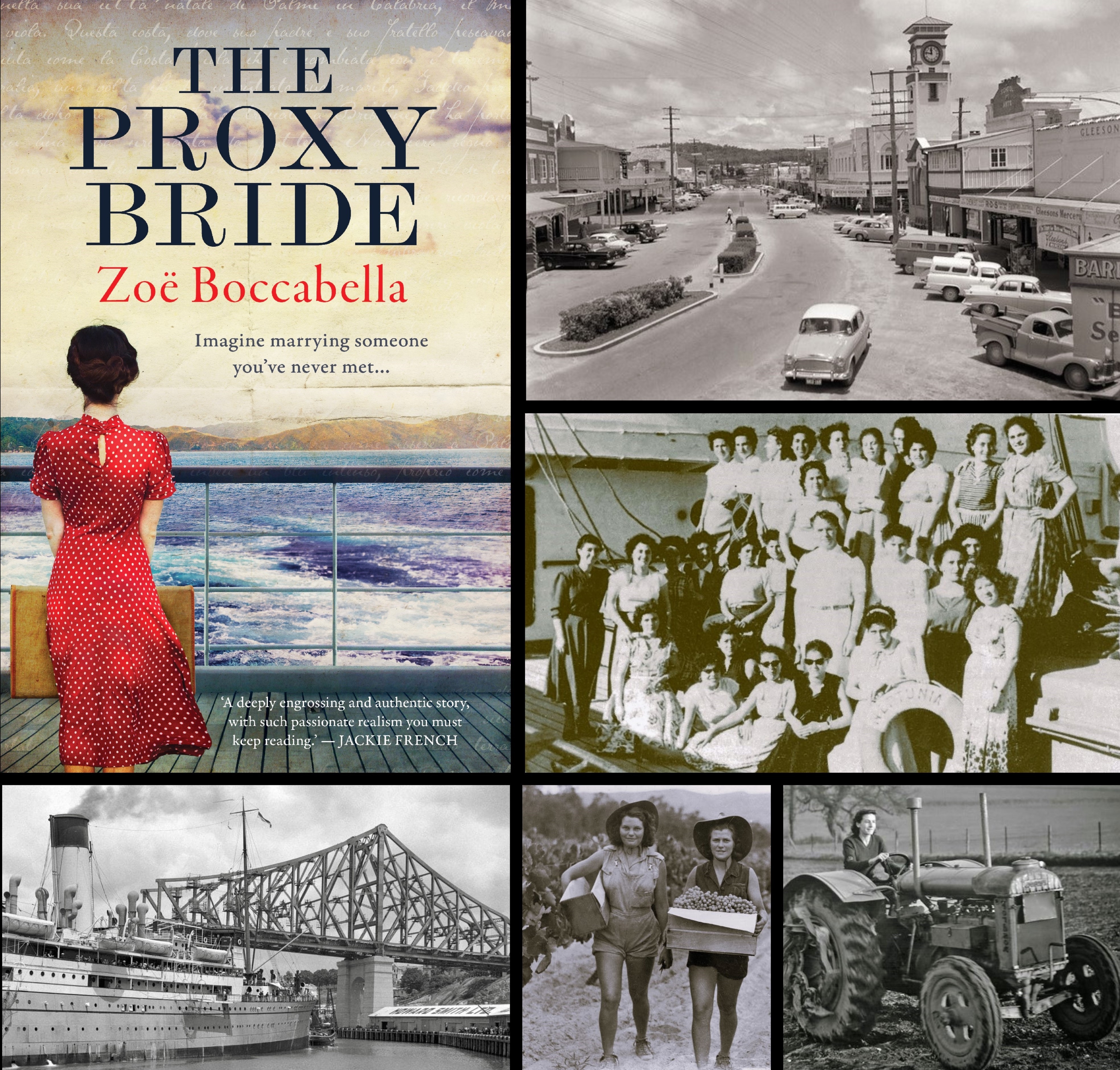
 I’ve been ‘hunkered down’ working on the next book but so you still know I’m here, 😊 I thought I’d delve into the old photo box to see what might be nice to share and this one caught my eye. Mainly because of the wattage in Nanna Francesca’s smile. She looks so happy!
 It’s pretty quiet here at present while I work on the next book, so here’s a look back to Italy when I was in Abruzzo and wrote Mezza Italiana. The day I hung the freshly-washed sheets out on the old pulley clothesline at the house in Fossa. It’s such an iconic image in Italy, a busty woman suspended half out a window, hanging her sheets on these pulley lines. However, any romantic notions were quickly quashed!
 It is fifteen years since the 6.3-magnitude earthquake that struck Abruzzo at 3.32am on 6 April 2009, taking the lives of 309 people and leaving 70,000 homeless in around fifty-six towns. My heart is with those who lost so much… the victims, their loved ones, all those who were displaced, the many still working hard to recover and rebuild in the long years following.
 “Ricordo del 26 July 1950 sulla spiaggia di Palmi – Memory of 26 July 1950 on the beach of Palmi…”
 A part of my Italian-Australian life in two photos… the first one – Nanna Francesca (centre) taking her visiting cousins from Sydney to Qld’s Big Pineapple. To me, there’s something about seeing these three Italian migrant women standing in front of something so Australian, knowing how my nonna loved going there and knowing how it was a world away from their stone villages in Italy. Nanna Francesca brought me back an enormous Big Pineapple pencil with a pineapple on the end of it. I was about five (and still have it!) She also bought herself a Big Pineapple tea-towel and salt and pepper shakers.
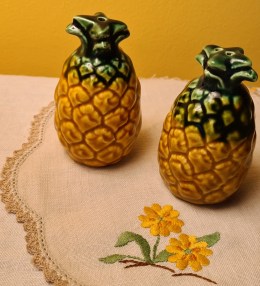 These shakers – in the second photo – sat, never used, behind glass in her ‘good’ cabinet, for decades. Then, after my grandparents had both died and the family was packing up their house of more than fifty years, I found myself standing in front of this cabinet looking at those two pineapples. Yes, they were kitschy but I couldn’t let them end up lost, so now they sit on a bookshelf in my kitchen, a little reminder of Nanna Francesca that makes me smile.
 I never expected to end up with a collection of linens that span four generations of women on both sides of my family. Especially since, as a teenager, I’d hope for the latest record for my birthday only to be disappointed when Nanna Francesca gave me tablecloths ‘for my Glory box’. Again. For years these sat unused along with the tea towels, doilies and other items I also had no interest in then.
 A quiet Sunday, Brisbane, 1954, out front of the fruit shop and milk bar… when cousin Tony came to visit from Melbourne and everyone met there for photos since, at this time, Nonno Anni kept it open from 7am until 10pm, 363 days a year.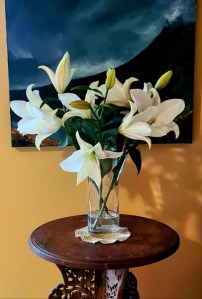


 Thank you for joining me here throughout the year – for your wonderful interest in and support of my books and for sharing your own experiences and memories with me.
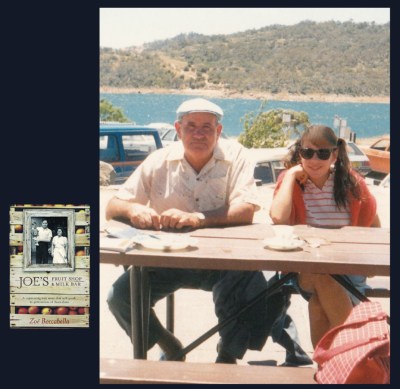 It was actually Nonno Anni who originally gave me the idea for, The Proxy Bride. When I was talking to him about his life for Joe’s, he mentioned by chance that during WW2 when he and other Italian men were taken from farms around Stanthorpe and sent to internment camps, the women and children suddenly left alone did it very tough. He later heard they were given no assistance and with curfews and restrictions weren’t allowed to drive, many didn’t know how to use the farm equipment or ride a horse and faced poverty and starvation. He mentioned this group of women who banded together to keep their farms going. That really struck me and I felt I’d come back and write about it. When I learnt that some of these women were also proxy brides, it opened up more to the story.
 Four generations of women in my family, 100 years and one significant change…
 On the kitchen table today… a friend’s home-grown lemons and mandarins on one of Nanna Francesca’s 1950s dinner plates. So lovely when someone brings you fruit and flowers they’ve grown in their garden. To me they’re the perfect gifts. (And the fresh, crisp lemon scent currently in the kitchen is divine!) 🍋
 Zoe xx
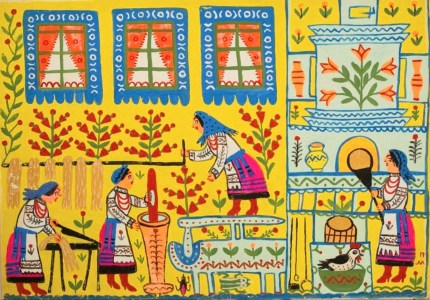 My House, My Truth, 1989 by Mariya Prymachenko (1909-1997). “My house, my truth… my mother did it all and gave me. She sewed, spun, baked bread and pounded millet.” Mariya Prymachenko.
 1940s, Brisbane – you’re walking along a city street and suddenly a smiling photographer in a suit and tie hands you a card that reads: Your photograph has just been taken. Then he moves away to find his next mark. The following day you hand over the card at a photo kiosk to see your image and maybe order a copy…
 “In 1939, Giacinta sets sail from Italy to Australia. Decades later, a granddaughter discovers the true story of her family… A stunningly crafted novel of family, secrets and facing adversity.
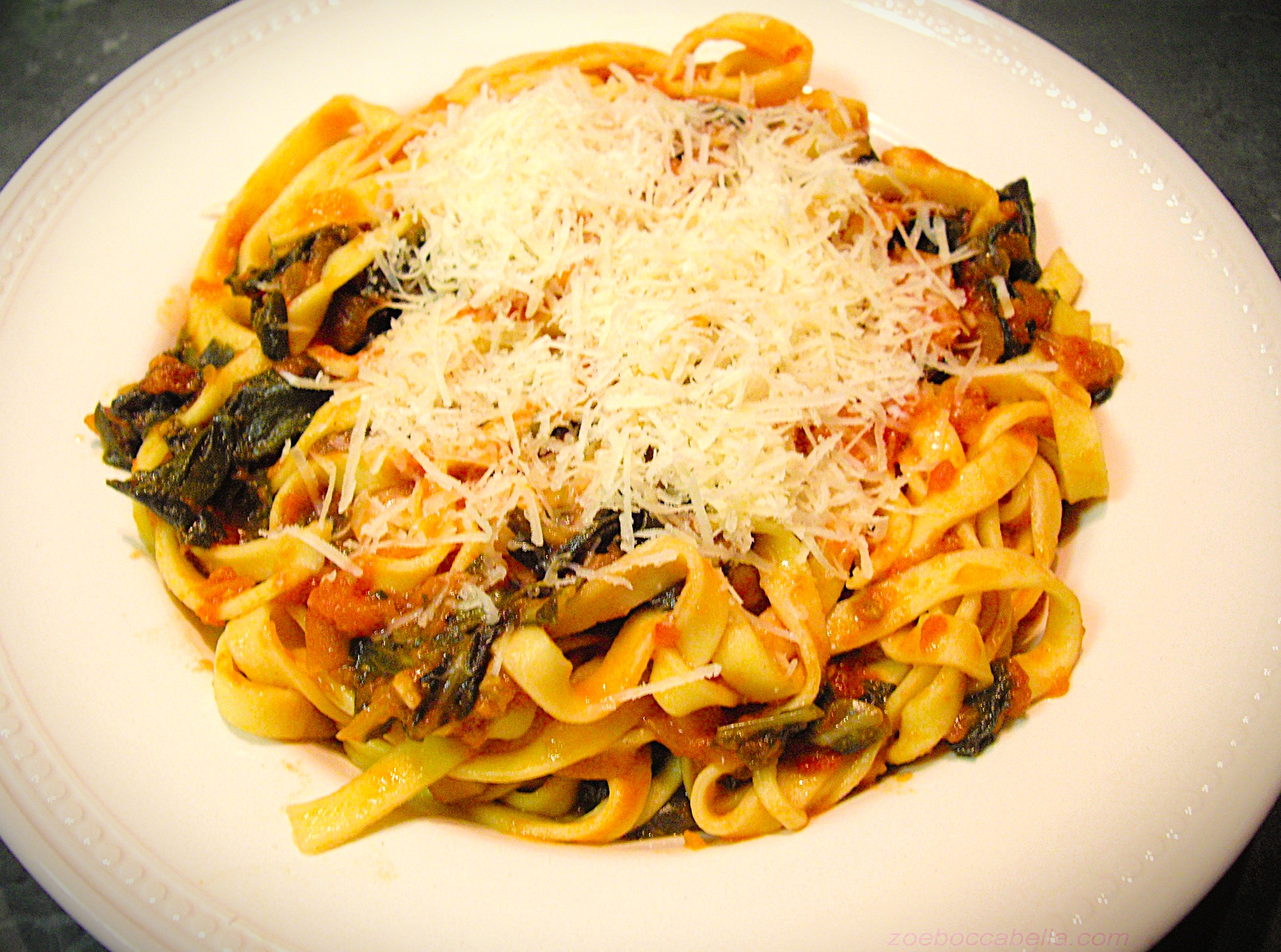
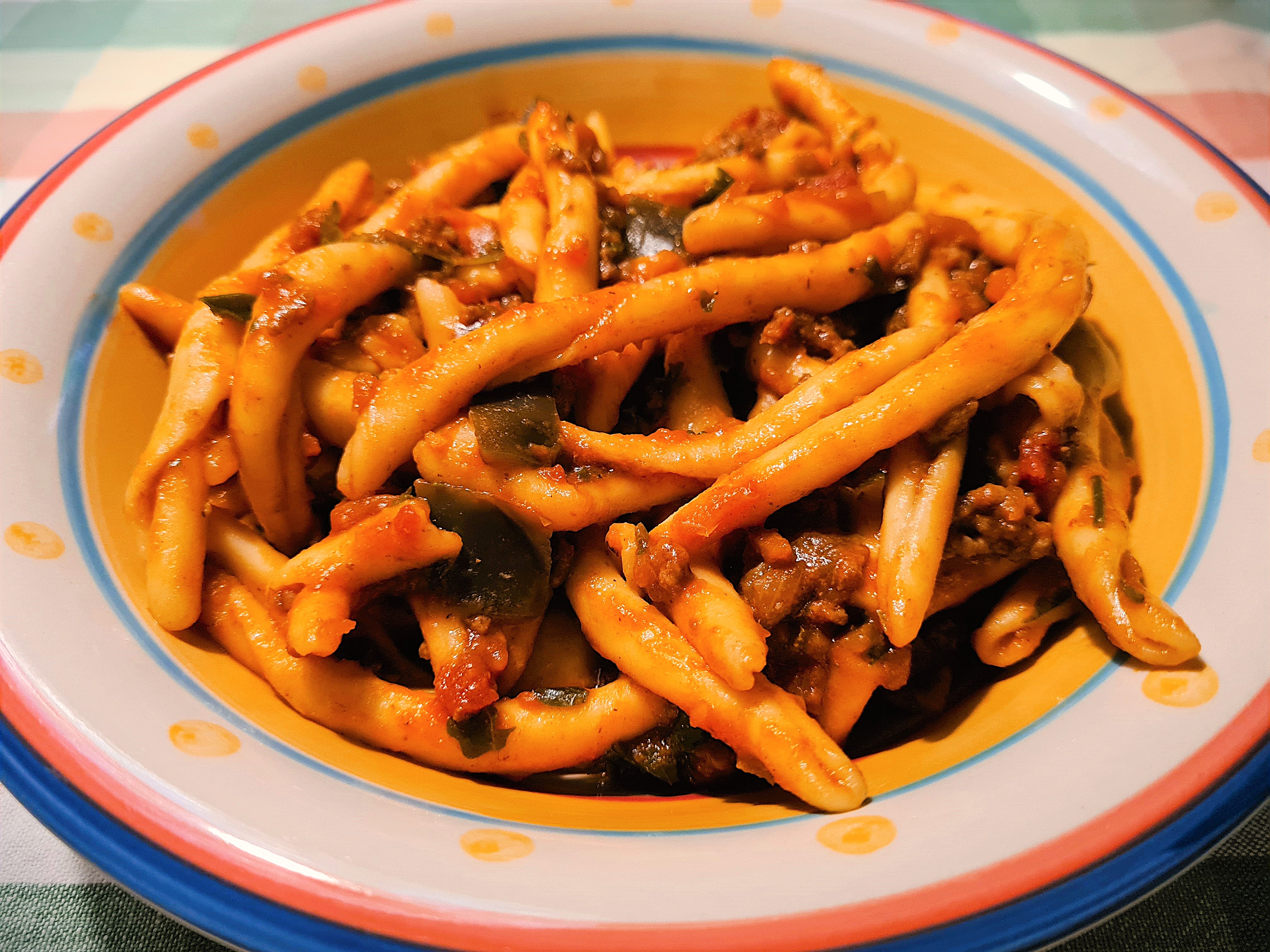 When we cook the same dishes that our ancestors cooked it connects us to them, to our history and it also brings us back to something within ourselves that we mightn’t have thought of for some time or something we hadn’t yet discovered. Just the aroma of a dish cooking can release a trigger of deep memories that lets things rise up and take shape in us.
 The maccheroni Calabrese (pasta rolled on a knitting needle for its shape) has a richer red sauce with melanzane and chillies that Francesca’s town of Palmi is known for.
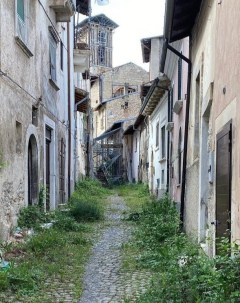 If you have any link to Abruzzo, I warn that this footage may be hard to watch as those filming go right into the most intimate parts of homes, which may just happen to be yours or of someone you know. That said, the young men filming have done so with respect, have only entered houses where the doors were already open and have concealed the name and whereabouts of the village. (Considering my own family’s house is one of those looted since the earthquake, I appreciate this.) By the end, they also appear to be overwhelmed by all they’ve seen.


