
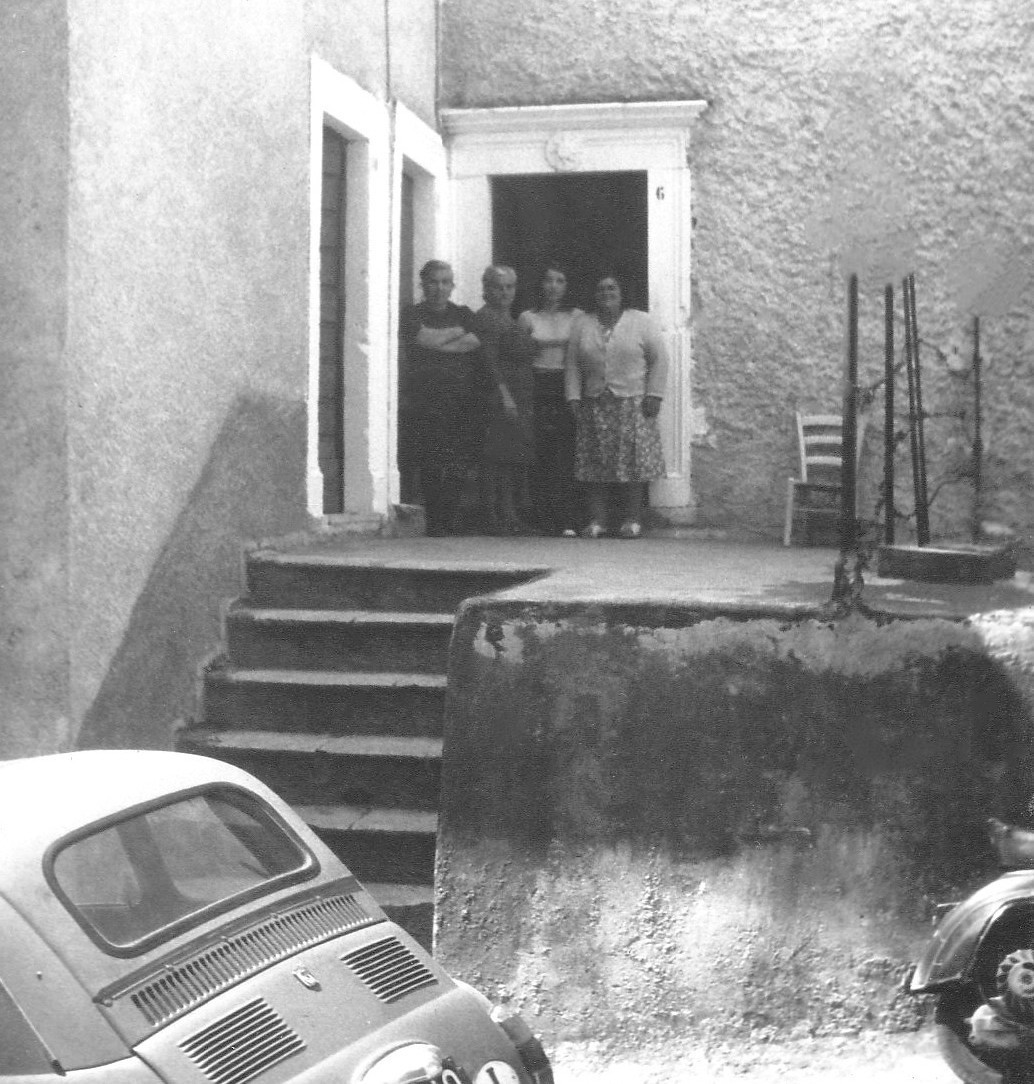
 Nanna Francesca and ‘posse’ outside the Fossa house in 1975 (including Pierina, far left, Nonno Anni’s cousin, born the same year he was, who lived in his family’s house after they’d migrated to Australia).
As I got older, I learnt how it felt to be the younger woman, standing amid the older women but just that little bit behind, waiting for your turn to step forward. The same way, as you sat together in conversation, the older women’s talk would dominate – topics hurtling from food to people to unfamiliar happenings and I’d be grasping to hold on as we were whisked away into another story.
There were times I’d get restless and think I’d much rather be off somewhere else, or seeing what Nonno Anni and ‘the men’ were up to, but Nanna Francesca would weld me with her eyes to stay put and for that I’m grateful now. It was then that I learnt to listen, sitting quietly, and now I realise the value of basking in the company of older women who’ve seen much, dealt with much and have so much precious experience to impart – as well as perhaps that ciambella cake recipe. 😘✨💛
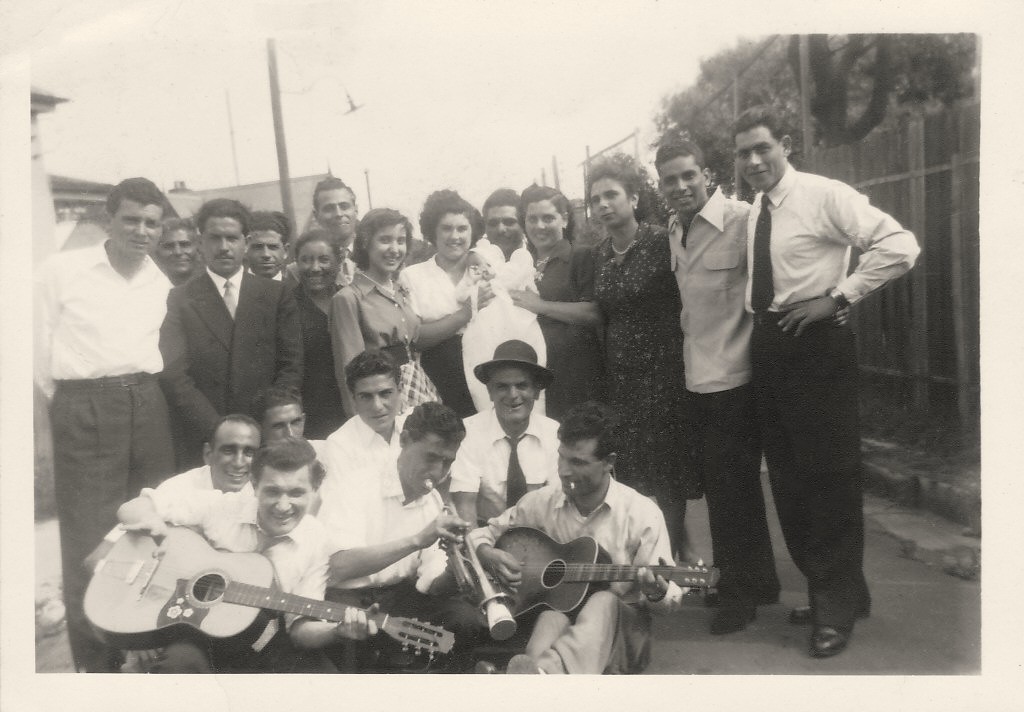 I found this lovely photo of Nanna Francesca’s Sydney cousins and friends tucked in with a letter sent to her in Brisbane in the 1950s. The way news was shared of a new baby and baptism celebration back when it wasn’t common to hop on plane (and who could afford to take time off from work anyway).
 It’s Capetièmpe in Abruzzo – that special time of year from all hallows eve for about twelve days when the kitchen table is laden with delicious food from harvest time and places set for both the living and the dead. When there are candles and bonfires of endings and renewal, picnics in cemeteries and masked children go to each house collecting treats from the laden tables to share with their poorer families.
 The spring daisies are out at present in the garden 🌼🤍🐝 and they’ll forever remind me of Nanna Francesca and the daisy bush in her Brunswick Street front yard that she often asked me to stand next to for a photo. (There were actually daisies on this little green dress Grandma Lorna had sewn for me but they’re little hard to see as Nanna Francesca’s photos could be a bit ‘hit and miss’ and blurry if she pushed the camera button too hard!)
 Nanna Francesca with my dad (far left) and other residents at 157 Leichhardt Street, Spring Hill, inner-city Brisbane. For several years, one of the flats here was my grandparents’ home when they first started their fruit shop and milk bar. ‘Stonehenge’ – with its flats and serviced rooms where so many migrants, especially Italians, stayed ‘when they first got off the boat from Italy’.
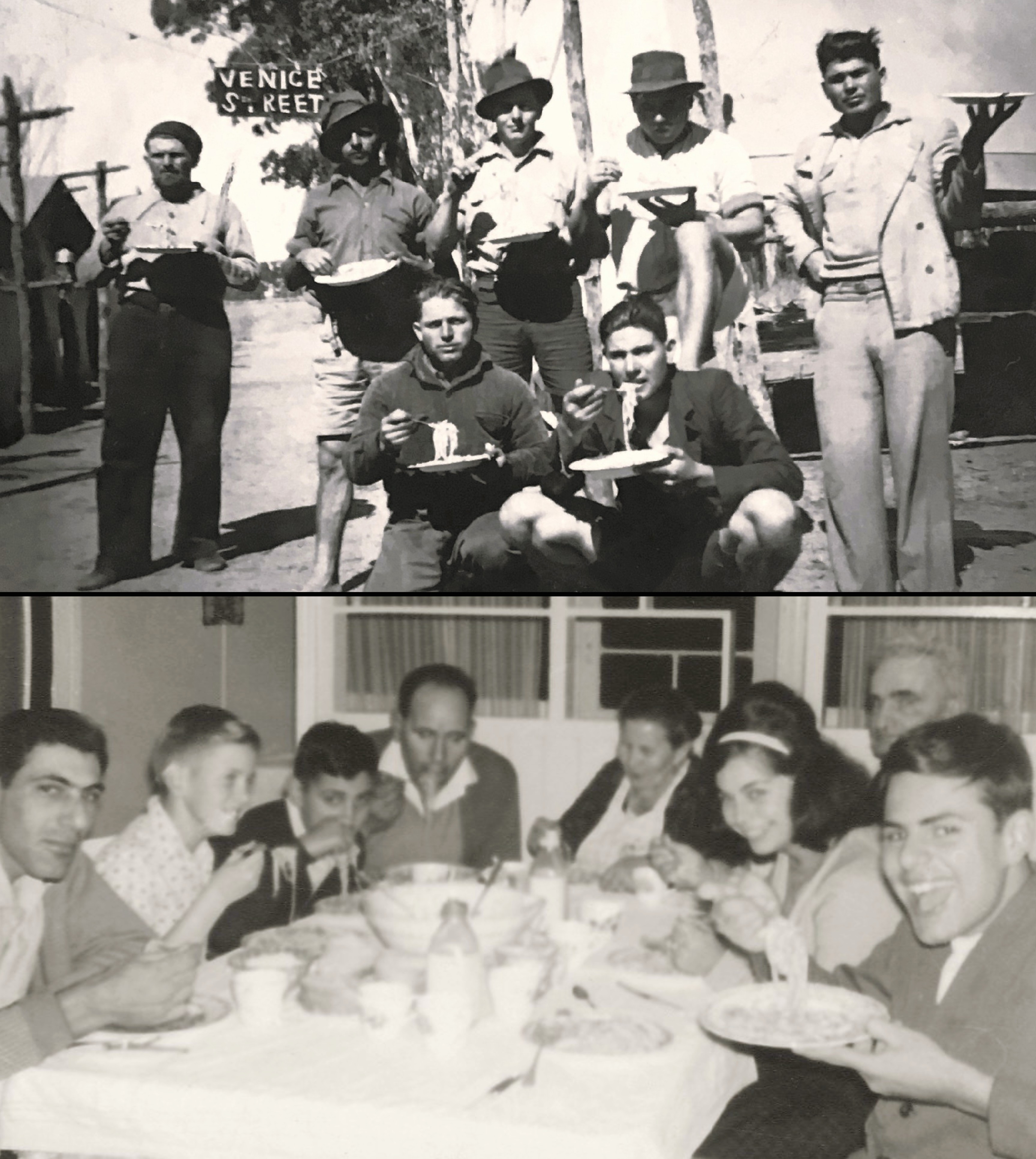 An incredible thing happened recently… I’m working on the next book, in particular, a part of it that’s an update on the internment camp Nonno Anni was in, when out-of-the-blue, I’m contacted by someone whose father was in the same camp. (The secret camp authorities said never existed, though any of us who had family in there know that’s not true.)
 Part 3 – Il grande viaggio 1975… 50 years since Nanna Francesca and Nonno Anni took their ‘big trip’ overseas and returned to Italy for the first time since the 1930s.
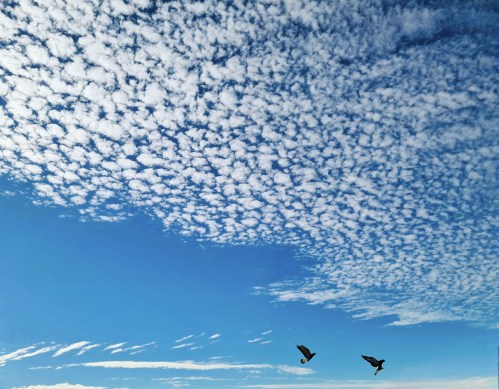 Such stunning skies this time of year when the seasons overlap… these ripples of undulating cloud said to portent that – change is on the way. Known to many as ‘mackerel skies’ for their pattern like mackerel skin, in Italy they’re called pecorelle, little sheep, or cielo a pecorelle, ‘sheep sky’. (In The Proxy Bride, when they’re looking at the clouds, Nonna Gia says that Italian saying, Nuvole a pecorelle, pioggia a catinelle.)
 “Ricordo del 26 July 1950 sulla spiaggia di Palmi – Memory of 26 July 1950 on the beach of Palmi…”
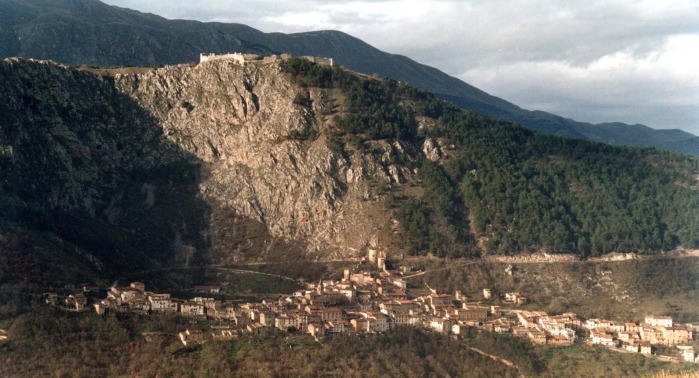
 This artwork is called, Nature Thriving by Gianna Fallavollita and if you look closely, you’ll see it is a front door in Fossa, which has been a ghost town since the 2009 Abruzzo earthquake. I have to say, it evokes many different emotions to see the town where my ancestors lived over more than six centuries, now gradually being taken over by nature, forever entwined with Monte Circolo on which it sits.
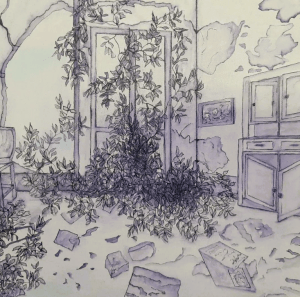 Gianna, whose parents are from Abruzzo and who has a strong connection to her own Italian heritage, contacted me to tell me how much Mezza Italiana resonated with her and I was so touched and thrilled when she said this has also inspired her to create a series of artworks depicting my family’s town of Fossa in, ‘Where the Wild Things Thrive’, a group exhibition currently on display until Sunday 26th November, 2023 at Back2Back Gallery, 57 Bull Street, Cooks Hill, Newcastle.
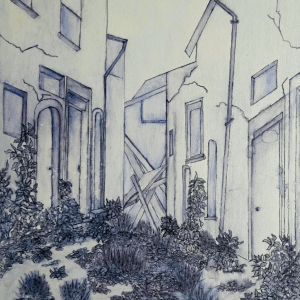 My deepest thanks to you, Gianna, and for your beautiful art. I hope so too. I’m still heartbroken about what happened to Fossa and many other beautiful towns in Abruzzo after the earthquake. Particularly that it will soon be 15 years, in April, that most residents have been unable to return to their homes in Fossa. Some of these houses, like my family’s one, which I wrote about in Mezza Italiana, have belonged to the same families for hundreds of years.
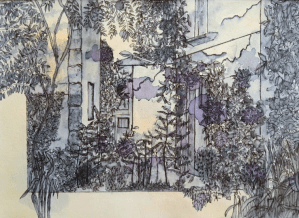 I’ve long had a love of art and it feels particularly special to discover my writing may in some small way have played a part in some of Gianna Fallavollita’s artworks. I hope that together these may convey how natural disasters continue to affect a place and its inhabitants long after the media reports have faded away.
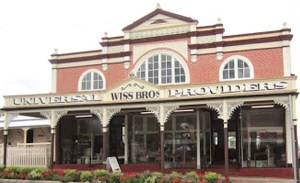
 I didn’t know this was a thing and didn’t expect to discover I’d become a ‘ghost sign hunter’ by seeking out these old signs in towns I’ve recently visited around central Victoria. But yes, apparently this is a form of ghost hunting that goes on throughout Australia (and no doubt other places too).
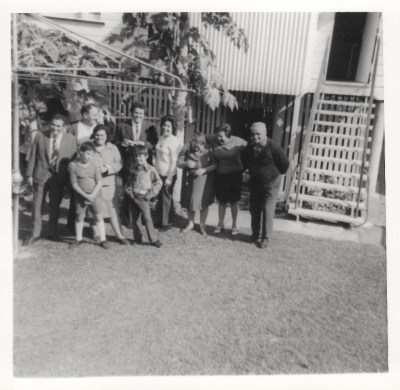 There’s so much I love about this photograph taken in the Brisbane backyard of Granny Maddalena and Nonno Vitale’s house… everyone under the Hills hoist, Granny bending over giggling, the woman’s arm around her. Nonno Anni looking over to see what they’re laughing at, Nanna Francesca always ready for the camera, holding the young boy who doesn’t look so keen to be in the photo.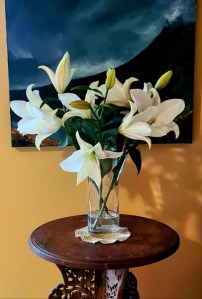


 Thank you for joining me here throughout the year – for your wonderful interest in and support of my books and for sharing your own experiences and memories with me.
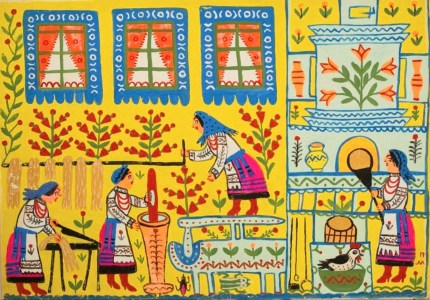 My House, My Truth, 1989 by Mariya Prymachenko (1909-1997). “My house, my truth… my mother did it all and gave me. She sewed, spun, baked bread and pounded millet.” Mariya Prymachenko.

 1940s, Brisbane – you’re walking along a city street and suddenly a smiling photographer in a suit and tie hands you a card that reads: Your photograph has just been taken. Then he moves away to find his next mark. The following day you hand over the card at a photo kiosk to see your image and maybe order a copy…
 Last Friday, I discovered this beautiful artwork by Ukrainian artist, Mariya Prymachenko (1909-1997) titled, ‘A Dove Has Spread Her Wings and Asks for Peace’, 1982. I’ve just found out that on Sunday, invading Russian forces burned down the museum that was home to dozens of Mariya’s paintings.
 Mariya painted these paintings when she was in her 70s. This one is titled, ‘Our Army, Our Protectors’, 1978. I can’t tell you how distressed I feel at what is happening in Ukraine and other parts of the world where aggression and injustice is being put above people, animals, nature, art, music, culture, food, peace – everything that makes our world such a beautiful place.
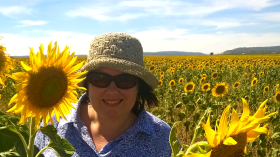 I stand in solidarity with the people of Ukraine. May they continue to stand tall, bright and independent like the sunflowers that are their national flower.
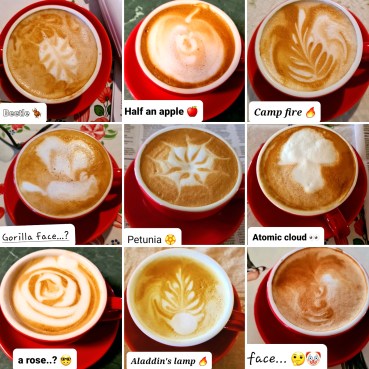 Verso buoni finali e buoni inizi! To good endings and good beginnings (and good coffee too!) What a time it is at present. “Mamma mia!” as Nanna Francesca would say, while Nonno Anni would likely raise his hands, palms up, as if all we can do is get on with it as best we can.
 I just heard someone in the neighbourhood practising the Last Post to play at dawn for ANZAC Day tomorrow and it gave me goosebumps. As we bring to mind all those affected by war and I think especially of those men in my family who served in both world wars and Vietnam, I thought this year I’d share with you another perspective of how it was for three different women in my family during war…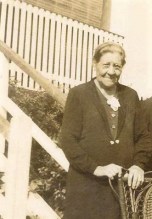

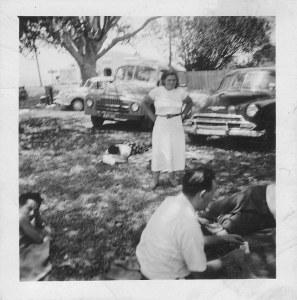 …small moments of beauty.
 Came across this in an old, cardboard box of photographs of my grandmother’s:

 Walking around Fossa, along lanes that become so steep and narrow they merge into steps or descend into tunnels, I began to notice all the different doors I passed. Some with stylised, door furniture of lion heads or dragons and beautifully varnished wood, others crude, weathered timber, or painted mission brown.
 Came across this photograph of my family’s Applethorpe farm in the 1950s with the orchard in flower and realised when I was there doing research for Mezza and Joe’s, I happened to take a picture from almost the same spot 60 years later.
 Patting il Porcellino, ‘the little pig’ for luck, (left) in Sydney, (right) in Florence. These bronze, wild boar (cinghiale) sculptures are replicas of the original by Pietro Tacca (1577-1640) commissioned by Cosimo II de Medici in 1621 that is now in the Museo Bardini. Apparently since at least 1633 visitors to Florence have ‘rubbed the snout’ for luck and to ensure their return to the city and tourists now rub it so much they have to replace the sculpture every decade or so.
 In this photograph of my family’s fruit shop and milk bar in its earlier days, it’s apparent how it began very modestly with my grandparents standing on the footpath in Ann Street selling produce from a ‘hole in the wall’ before they expanded the space to include a milk bar. Visible in the top left is some of the sign that hung over the footpath from around the early 1950s. It was white with ‘milk bar’ in red Perspex letters and lit up at night.
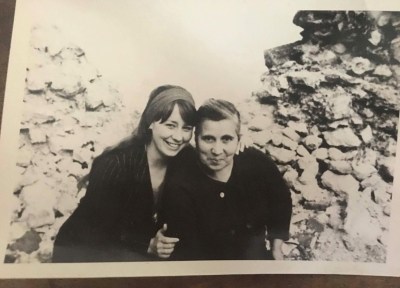 Since the earthquake, my family’s house in Italy remains too damaged to stay in. Much of the village remains empty. And now, thieves have broken into the house. They mainly upturned drawers adding to the mess of earthquake damage, since belongings inside are mostly of sentimental value, but of course it is another blow.
 … at around dawn while most of the village still slept.
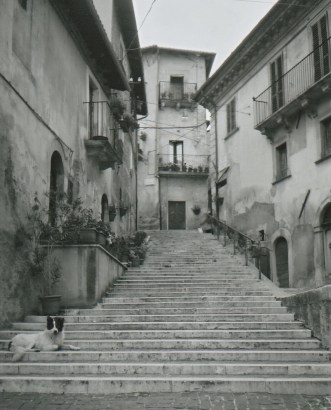
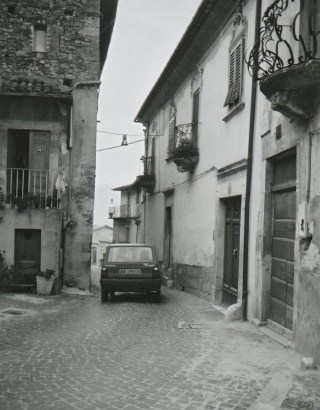
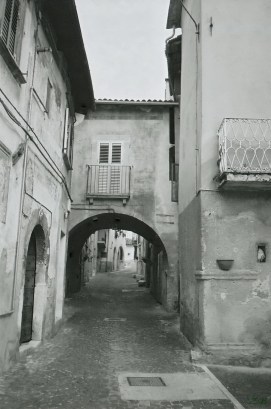
 Even though
 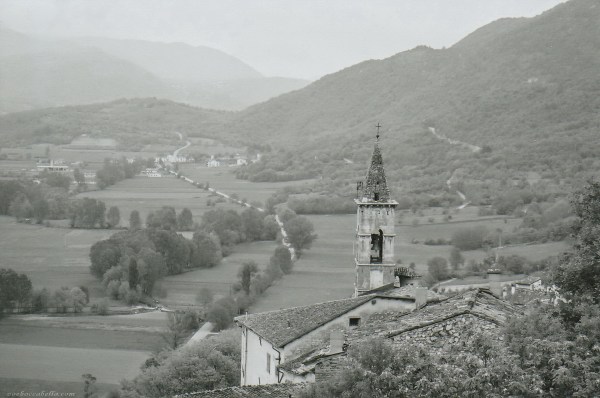 The steeple of Santa Maria Assunta in Fossa… the church that sits opposite my family’s house in Abruzzo. It was lovely to walk along the lanes below and listen to the bell tolling the time of day or to hear it from afar when you were on your way back to the village.

 Perhaps it’s old-fashioned but I still have a wall calendar where I write up all that’s happening. This year it features paintings by William T. Cooper (1934-2015) an Australian artist who painted mostly natural subjects, especially birds. He painted with extreme precision so if there were a certain number of a certain colour feathers then that is exactly what he depicted.
 A new year stretches ahead and there is something thrilling and also sobering in not knowing where our paths may meander as the months unfold. Hope this year is a wonderful one for you that brings much happiness! I couldn’t go past this beautiful painting by L’Aquila artist,
  An original glass {circa 1950} from Nanna Francesca and Nonno Anni’s milk bar. These were mostly used for my grandfather’s sought-after, homemade orange drink but customers would also request milkshakes in them too if they preferred glass to one of the metal canisters.
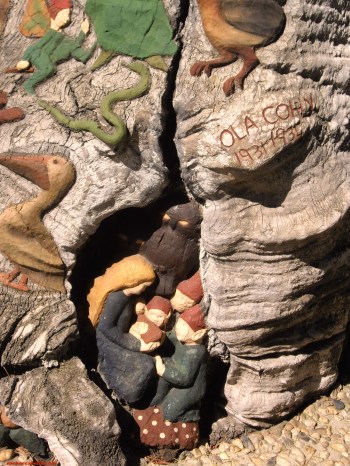 Part of The Fairies Tree in Fitzroy Gardens, carved in the early 1930s by sculptor Ola Cohn {1892-1964} as a gift to the children of Melbourne. Though my own childhood is distant, I found myself rushing through the gardens to find it. And while there were plenty of beautifully carved tree folk to capture, I was taken by this little group hiding in a notch near the base of the trunk, and especially like the owl.
 A gift to the children of Melbourne…
 A beautiful, mosaic artwork is emerging along Mercers Lane in Ingham, Queensland to commemorate the history of the local sugarcane industry. Really inspiring to discover around 2000 local volunteers and tourists so far have taken part in creating the mosaic and it’s wonderful to see local history recorded in art like this, particularly all the different cultures that have been a part.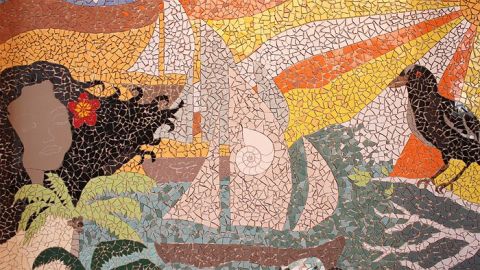
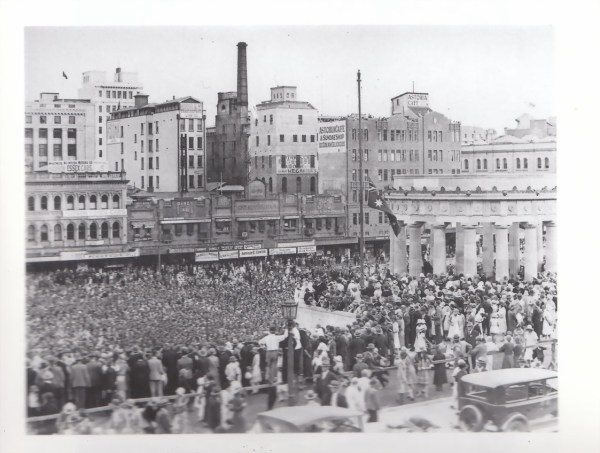 Official opening of Anzac Square in Brisbane on 25th April, 1930 (taken from Ann St looking towards Adelaide St).
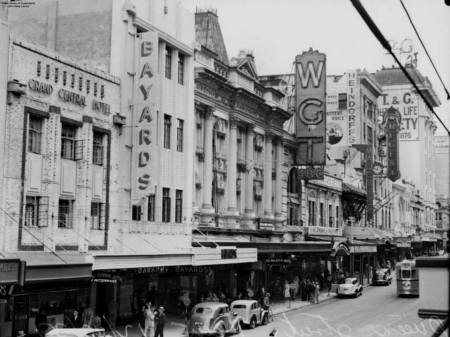 ….as it looked when my grandfather, Annibale arrived alone in Australia at the age of 15. Met by his father, Vitale, who took him straight from the ship dock to this street to buy some new work boots. The very next day, they left Brisbane for Annibale to commence work at a farm 200km away. After seven years apart, father and son got to spend just 24 hours together.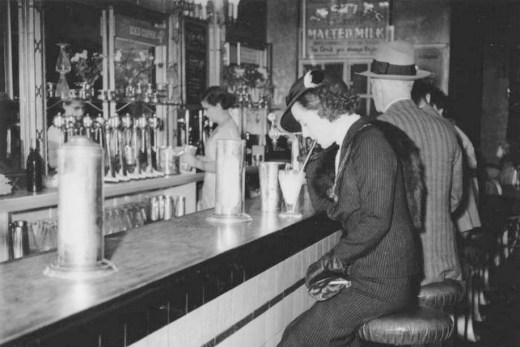
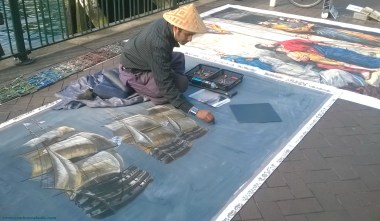 Giuseppe, aka Pepe, is a Madonnaro whom we came across by the harbour at Circular Quay in Sydney. Since the 16th century, Madonnari from Puglia in Italy’s south have been itinerant artists who originally went to cities to work on the cathedrals and when the job was done found a way to make a living by recreating paintings from the church on the pavement. Aware of festivals and holy days in each town, the Madonnari would travel to different provinces throughout Italy to eke out a living from observers who would throw coins if they approved of the work.
  Spring in Australia starts today {although the equinox is a few weeks off yet}. I wish I’d grown these myself but I took this picture during the northern hemisphere’s spring – in Beutelsbach, Baden-Württemberg, Germany, where I was doing research for a future book. It seemed every window box and garden were growing beautiful red flowers.
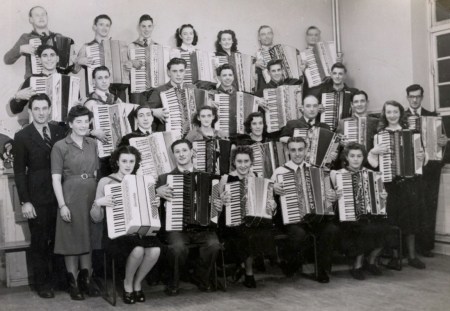 For the first time, we recently saw a piano accordion orchestra concert. It was great, some of the music taking me back to attending those big Italian weddings when I was a child and also our family gatherings when my uncle sometimes played the piano accordion. Of course, there were a couple of classics played, including Volare and Funiculi Funicula.

 One Sunday morning, we came across the

 Anyone with Sicilian connections or who have been to Sicily may recognise this doll in folk costume (right) and the decorated cart, carrello or carrozza…
 The Lucini macaroni factory (circa 1859) is said to be the oldest building in Australia built by Italian-Australians. There are 150-year-old frescoes inside that unfortunately remained hidden as it was closed the day we came by. Sitting in the main street of Hepburn Springs in Victoria, the building was also the location for Jan Sardi’s film,


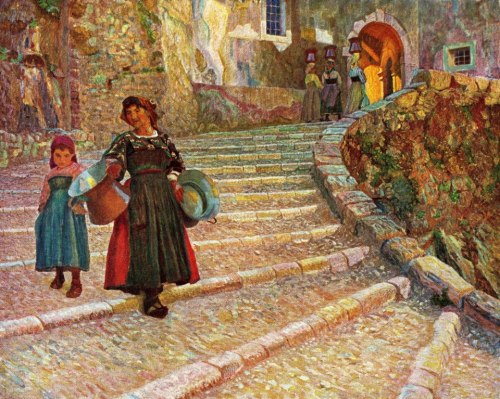 The woman in the foreground carries two conche, the copper vessels traditionally used in Abruzzo to collect water from the village fountain for the household. Perhaps she was teaching the young girl to carry it back on her head (depicted by the women in the background). The village women used to do so to transport all manner of heavy things with evidence of this including iron bedheads and, on occasion in very steep areas, even coffins.
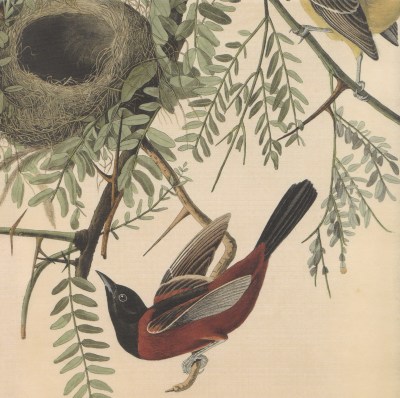 “Birds don’t only use their beaks to build: they press their breasts against the inner wall to make it round, imprinting their shape on their home, an interior formed by the steady rhythm of their beating hearts.”


 Jeffrey Smart, 1921 – 2013.


 Gargoyles, in their myriad forms include being carved to represent local heretics, controversialists, rogues, or personal enemies of the architect or building owner, particularly for ecclesiastical structures during the Middle Ages.
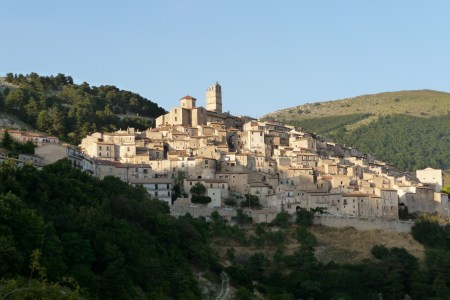
 This painting of Fossa in the Abruzzo is by artist Juan Alfredo Parisse, born in Buenos Aires, Argentina, and whose parents are from L’Aquila, Italy.

 For many centuries, baking in most Italian villages took place mostly once a week or even a fortnight. Both my grandparents told me how they recalled the women of the village taking their dough to the forno (often the only oven in the entire village), and that each piece of dough had an identifying mark on it for when the women came back to collect their baked bread.
 This picture of young priests
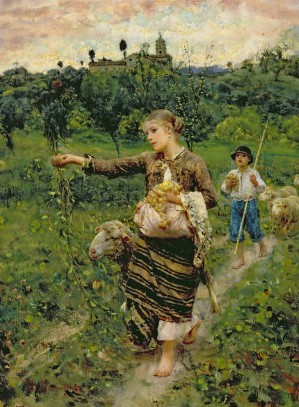 Born in 1851 in Tocco da Casauria of Pescara province, Francesco Paolo Michetti was an Abruzzese artist who aspired to paint ‘real life’ capturing people, animals, and local events. The Abruzzo was his inspiration and in 1883 he purchased a convent there as his home and studio. For the next 20 years, the convent was a meeting place for Abruzzo’s artists including writer Gabriele D’Annunzio. Time moves slowly in the Abruzzo and fortunately some landscapes such as in this painting remain.
 Piedmontese peasant wood-pipe carved from cherry wood that writer, artist and folklorist, Estella Canziani presented to The Folklore Society of London in 1911. She donated it along with other items from her travels in northern Italy when she wrote and illustrated her first book, Costumes, Traditions and Songs of Savoy (before she ventured to the Abruzzo in 1913 to pen Through the Apennines and Lands of Abruzzi).

 Zoë Boccabella