
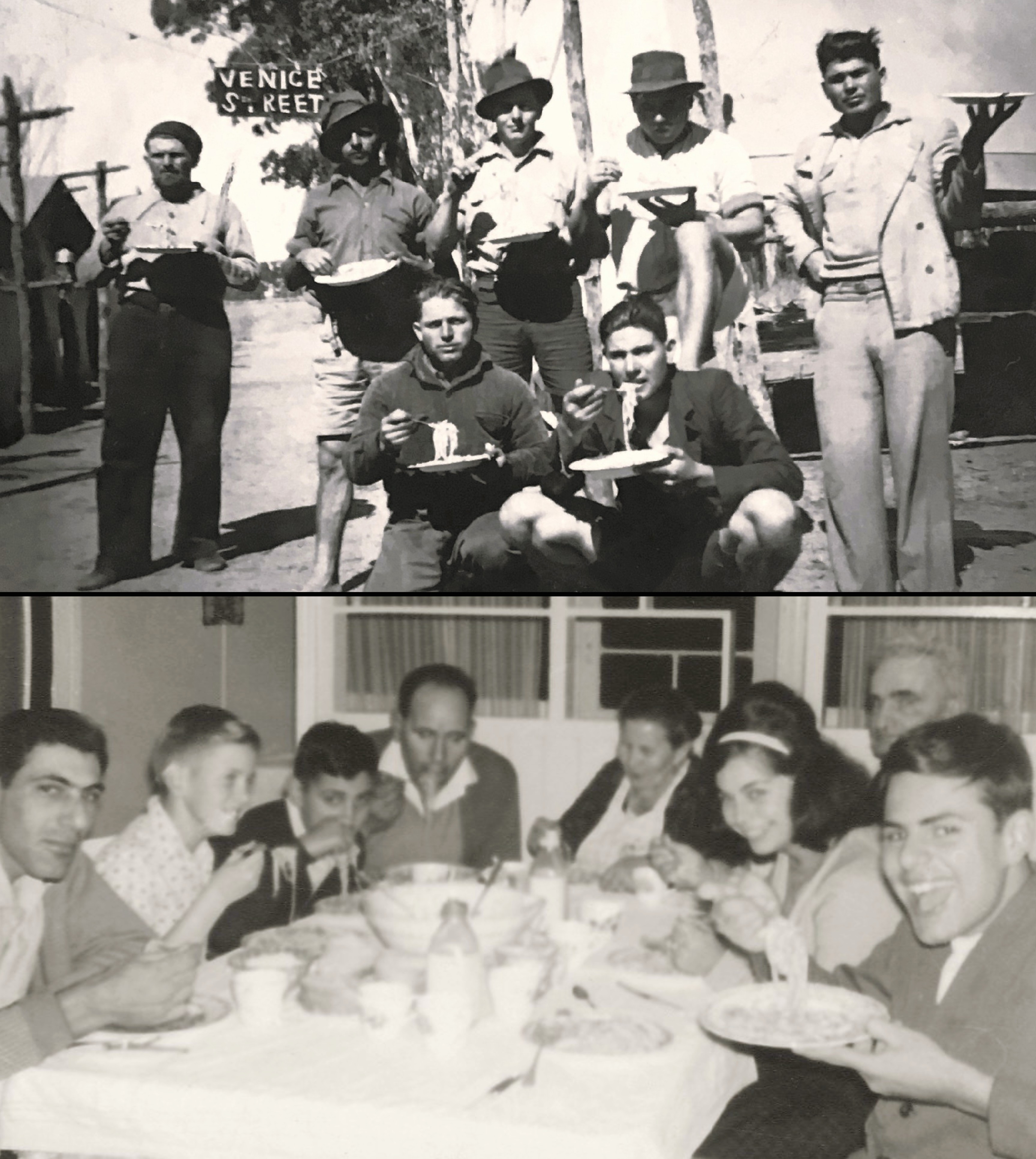
 Nanna Francesca with my dad (far left) and other residents at 157 Leichhardt Street, Spring Hill, inner-city Brisbane. For several years, one of the flats here was my grandparents’ home when they first started their fruit shop and milk bar. ‘Stonehenge’ – with its flats and serviced rooms where so many migrants, especially Italians, stayed ‘when they first got off the boat from Italy’.
I look at these women and their children – dressed well, hair done, shoes shined – and think of how it must’ve been for many of them at the time. Perhaps unable to speak much English, working at the cannery, a laundry, the egg board, or isolated at home, missing extended family. To me, none of the women are smiling easily and yet they’re still putting their best foot forward, there for each other. Their kids are smiling easily though, and this new generation will have more opportunities.
I have to laugh looking at my dad, as I can see why Nonno Anni used to joke that, ‘Remo had the devil in him as a kid’. This was the age Dad was when he climbed up a ladder to sit in the middle of the boarding house’s steep-pitched roof and Nonno Anni had to get him down (in the ‘Moroccan Beans’ chapter, Joe’s Fruit Shop and Milk Bar). And for those familiar with that chapter, I do wonder if the woman in the bottom photo was the sometimes exasperated ‘Mrs Simpson’ who ran the boarding house!
To see this spot in Spring Hill now, it’s like none of this ever happened. Of course, this house with its steep, chalet-style roof and walls of stone quarried by convicts is long gone, replaced with modern concrete buildings. I think that’s why I keep writing these stories (and am in the midst of another book now). They may only be small parts of our history about ‘ordinary’ people, yet perhaps it’s these parts that, in the end, are truly a part of us all and worth remembering for what may come. xxx
 An incredible thing happened recently… I’m working on the next book, in particular, a part of it that’s an update on the internment camp Nonno Anni was in, when out-of-the-blue, I’m contacted by someone whose father was in the same camp. (The secret camp authorities said never existed, though any of us who had family in there know that’s not true.)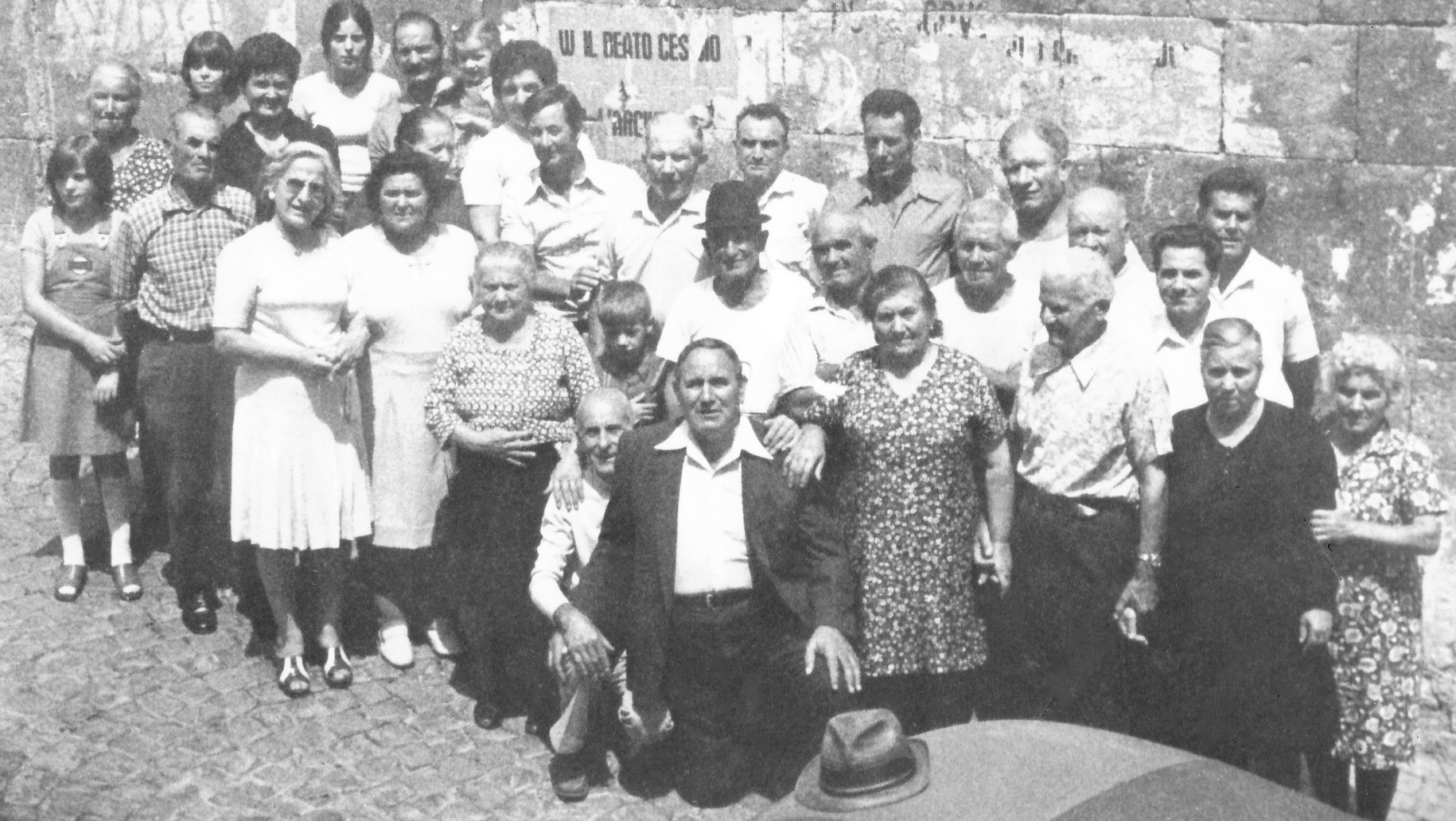
 In 1974, Nonno Anni and Nanna Francesca received a knock at the front door by two policemen warning them a big flood was coming and the power was about to be cut off…
 Nonno Anni and Grandpa Bob would’ve both turned 100 this month. I’m forever grateful to have had these two men in my life. They were there for all my significant life events, birthdays, graduations, wedding day, and, more especially, there for so much of my ‘everyday’ life as I spent many weekends and every school holidays with each of them for decades. I know I’m so, so fortunate to have been given their unconditional love, gentle guidance, care and wisdoms. They could both be very tough men at times and I received nothing but respect and love from them. I still think of them a lot and at challenging and uncertain times I think back to their ways and what they might do or advise. I’ll be writing more about each of them as they both remain an inspiration to me ❤️ – for now, I think what I wrote on page 112 of Joe’s Fruit Shop and Milk Bar, pretty well sums them up…
 A quiet Sunday, Brisbane, 1954, out front of the fruit shop and milk bar… when cousin Tony came to visit from Melbourne and everyone met there for photos since, at this time, Nonno Anni kept it open from 7am until 10pm, 363 days a year.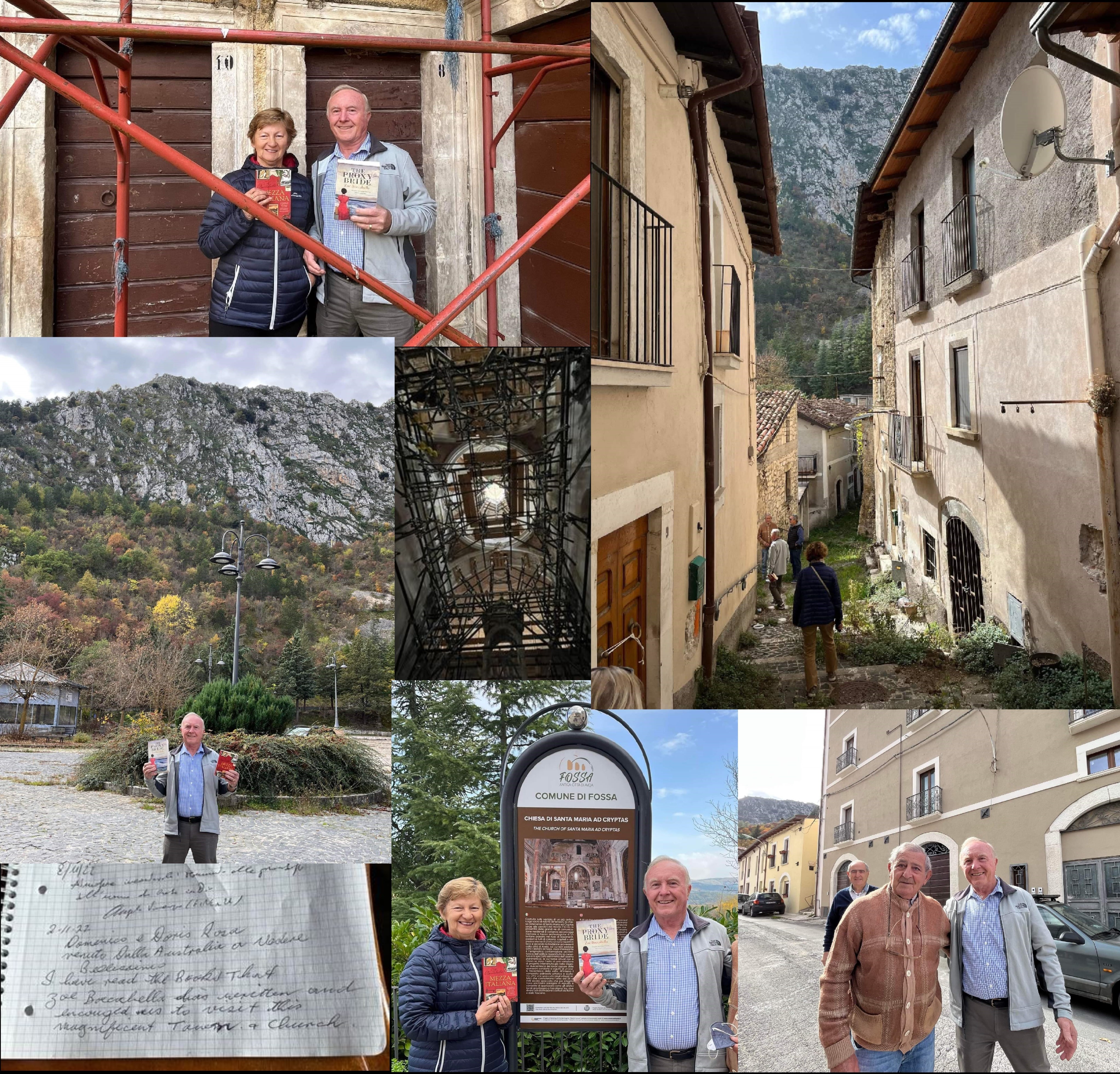
 It was actually Nonno Anni who originally gave me the idea for, The Proxy Bride. When I was talking to him about his life for Joe’s, he mentioned by chance that during WW2 when he and other Italian men were taken from farms around Stanthorpe and sent to internment camps, the women and children suddenly left alone did it very tough. He later heard they were given no assistance and with curfews and restrictions weren’t allowed to drive, many didn’t know how to use the farm equipment or ride a horse and faced poverty and starvation. He mentioned this group of women who banded together to keep their farms going. That really struck me and I felt I’d come back and write about it. When I learnt that some of these women were also proxy brides, it opened up more to the story.
 1940s, Brisbane – you’re walking along a city street and suddenly a smiling photographer in a suit and tie hands you a card that reads: Your photograph has just been taken. Then he moves away to find his next mark. The following day you hand over the card at a photo kiosk to see your image and maybe order a copy…
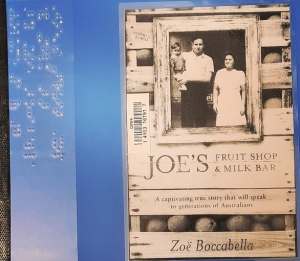 I’m so thrilled that,
 From tonight, ABC Nightlife will broadcast the audiobook of Joe’s Fruit Shop and Milk Bar read by the very talented, award-winning actress, Daniela Farinacci (who was absolutely lovely to work with!)
 In this photograph of my family’s fruit shop and milk bar in its earlier days, it’s apparent how it began very modestly with my grandparents standing on the footpath in Ann Street selling produce from a ‘hole in the wall’ before they expanded the space to include a milk bar. Visible in the top left is some of the sign that hung over the footpath from around the early 1950s. It was white with ‘milk bar’ in red Perspex letters and lit up at night.
 Even though
 Today it is 70 years since my Italian grandparents, Nonno Anni and Nanna Francesca signed the lease on premises to start up their fruit shop and milk bar in Australia.
 In Bendigo not long ago, I came across a bookbinding shop that is the most similar I’ve found in Australia to the one I came across in Florence (p.212 Mezza Italiana). I couldn’t resist these handmade books and the owner kindly offered to emboss my name on them.
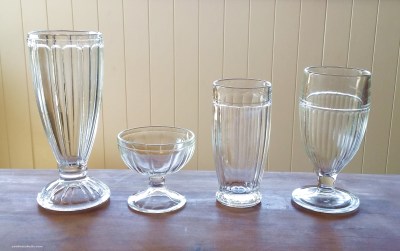 Original, circa 1950s glassware from Nonno Anni and Nanna Francesca’s milk bar… milkshake glasses, the glass for the homemade orange drink and the bowl used for ice cream sundaes and fruit salads.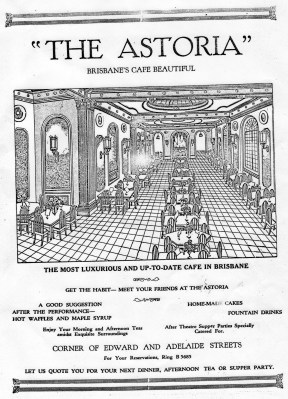
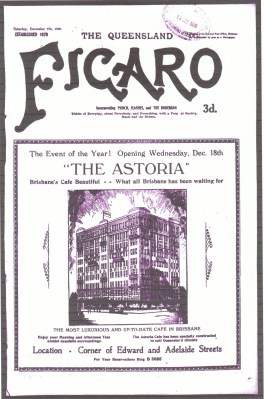 The Astoria Café in Brisbane, where my grandparents worked in the 1940s, had long been demolished by the time I wrote about it. I relied on my grandparents’ stories and old pictures and wished it had still been around for me to see.
 Nonno Anni behind the counter of the milk bar – one of very few photographs taken inside. Great to see the milkshake machines to the right. It is difficult to decipher some of the brands of sweets, cigarettes and biscuits around the counter though I can see Mars chocolates {first made in 1932}, Violet Crumbles {since 1913} and a sign for Peters ice-cream {since 1907}.
 An original glass {circa 1950} from Nanna Francesca and Nonno Anni’s milk bar. These were mostly used for my grandfather’s sought-after, homemade orange drink but customers would also request milkshakes in them too if they preferred glass to one of the metal canisters.
 Italian internees at the ‘secret’ Western Creek internment camp in 1942. My grandfather, Annibale (far right, standing) was 18 years old and working as a farmhand at Applethorpe when he was interned.
 One of the very few photographs taken inside my family’s milk bar in the 1950s (and also one of my favourites). Nonno Anni is behind the counter and Bisnonno Vitale is leaning on it.
 Recently, I have been travelling in southwest Queensland for research for the next book. In the main street of Laidley, I happened across this beautiful old building that was originally a bakery when it was built back in 1905. It is currently empty and seemed to be being renovated inside. Lovely how so many country towns value and utilise their historic buildings. Seeing the words ‘Soft Drinks’ in faded paint across the glass over the front entrance, I could not help imagining turning it into an old-style, 1950s milk bar…
 Stonehenge Boarding house at 157 Leichhardt St, Spring Hill, Brisbane, where three generations of my family lived during the 1940s. It is amazing to see how steeply pitched the roof is considering my father climbed to the top of it when he was not quite three and a half and my Nonno had to get him back down. Sadly, this house, built circa 1859 of convict-hewn stone, was demolished in the 1950s.
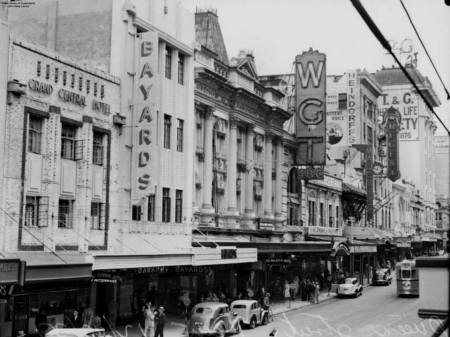 ….as it looked when my grandfather, Annibale arrived alone in Australia at the age of 15. Met by his father, Vitale, who took him straight from the ship dock to this street to buy some new work boots. The very next day, they left Brisbane for Annibale to commence work at a farm 200km away. After seven years apart, father and son got to spend just 24 hours together.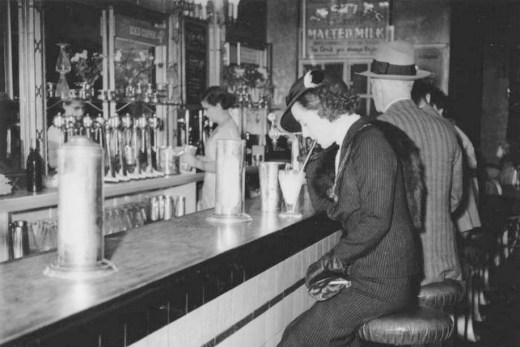
 For my Great-Granny Maddalena’s frittata, the main ingredients were eggs, some salt and flat-leaf parsley. She also used a lot of olive oil (her frittata never stuck to the pan!)
 The Italian ship, ‘Remo’, which is linked to four generations of my family… my great-grandfather, Vitale arrived in Australia for the second time aboard it in 1932, my grandfather, Annibale sailed from Italy in it when he was just 15 in 1939, my father was named after it, and my nephew shares with it his second name.

 For many centuries, baking in most Italian villages took place mostly once a week or even a fortnight. Both my grandparents told me how they recalled the women of the village taking their dough to the forno (often the only oven in the entire village), and that each piece of dough had an identifying mark on it for when the women came back to collect their baked bread.

 Zoë Boccabella