
 Nonno Anni told me when he received an orange for Christmas during his childhood in the 1920s, he treasured it. I knew he and his Mum were poor and village life in Italy was hard at that time, especially with his father far away in Australia to seek work, but an orange… I couldn’t quite believe it when I found this out as a child in the 1970s and oranges were so easy to get then. But fresh oranges were considered treasures before refrigeration and faster transport. Especially at Christmas considering that since ancient times, oranges have been said to bring joy, good luck and to ward off evil. (What must Nonno Anni have thought once he had a whole display of oranges at his fruit shop and milk bar!)
 So, with Christmas oranges in mind, I decided to bake an orange cake since it’s that time of year and it wasn’t until making it that I realised, this one cake of simple ingredients is also made up of elements from several generations… the Christmas orange story from Nonno’s Italian childhood, the cake tin well-used in baking for countless cake stalls and Australian country shows before my mother-in-law handed it onto us, the orange cake recipe in her mother’s 1930s cookbook, also passed on to us with affection. (And I love how the recipe’s first line is, three eggs and their weight in sugar…)
 If I’m honest, Christmas isn’t always the easiest time for me as it feels bittersweet with the happiness of those present mingled with the quiet of those unable to be or now gone. But food is so special in that certain dishes can trigger those lovely memories of people dear to us no matter how long it may be since we’ve seen them and this year, I feel happy that oranges can bring that little bit of sunshine.
 Warmest wishes and thank you for your lovely support and messages throughout the year. May 2020 be filled with light and some happiness no matter what else it may bring! Wishing you tante belle cose – many beautiful things, Zoe xx
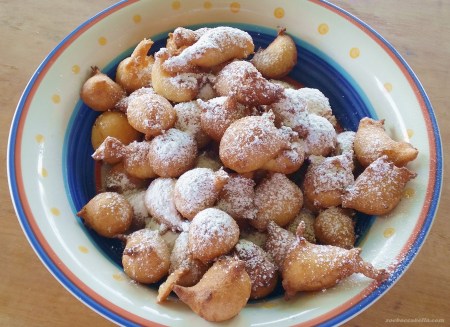 Time for some Italian Christmas treats… these poco zeppole {zippoli} are flavoured with citrus zest and Boronia Marsala {yes, the bottle with the little horse and cart on the label for those in the know}.
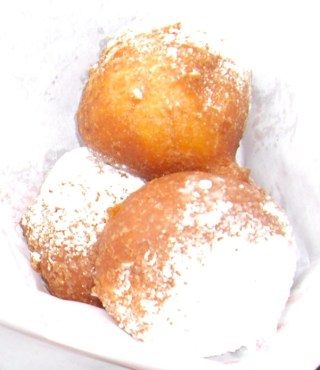 These little doughnut balls are also known as zippoli, zeppole or sfingi in Italy depending on the region where they are cooked. (I’ve also tasted the German version quarkbällchen – known too as ‘Bavarian snowballs’ – from a roadside stall not far from
  Caggionetti/calcionetti are traditional Italian Christmas treats particularly popular in Abruzzo (where my Granny Maddalena made them). They have a filling of almonds, walnuts, chocolate, chickpeas, lemon zest, cinnamon and honey enclosed in paper-thin ravioli casings fried in white wine and olive oil then cooled and dusted with icing sugar.

 Zoë Boccabella