
 An incredible thing happened recently… I’m working on the next book, in particular, a part of it that’s an update on the internment camp Nonno Anni was in, when out-of-the-blue, I’m contacted by someone whose father was in the same camp. (The secret camp authorities said never existed, though any of us who had family in there know that’s not true.)
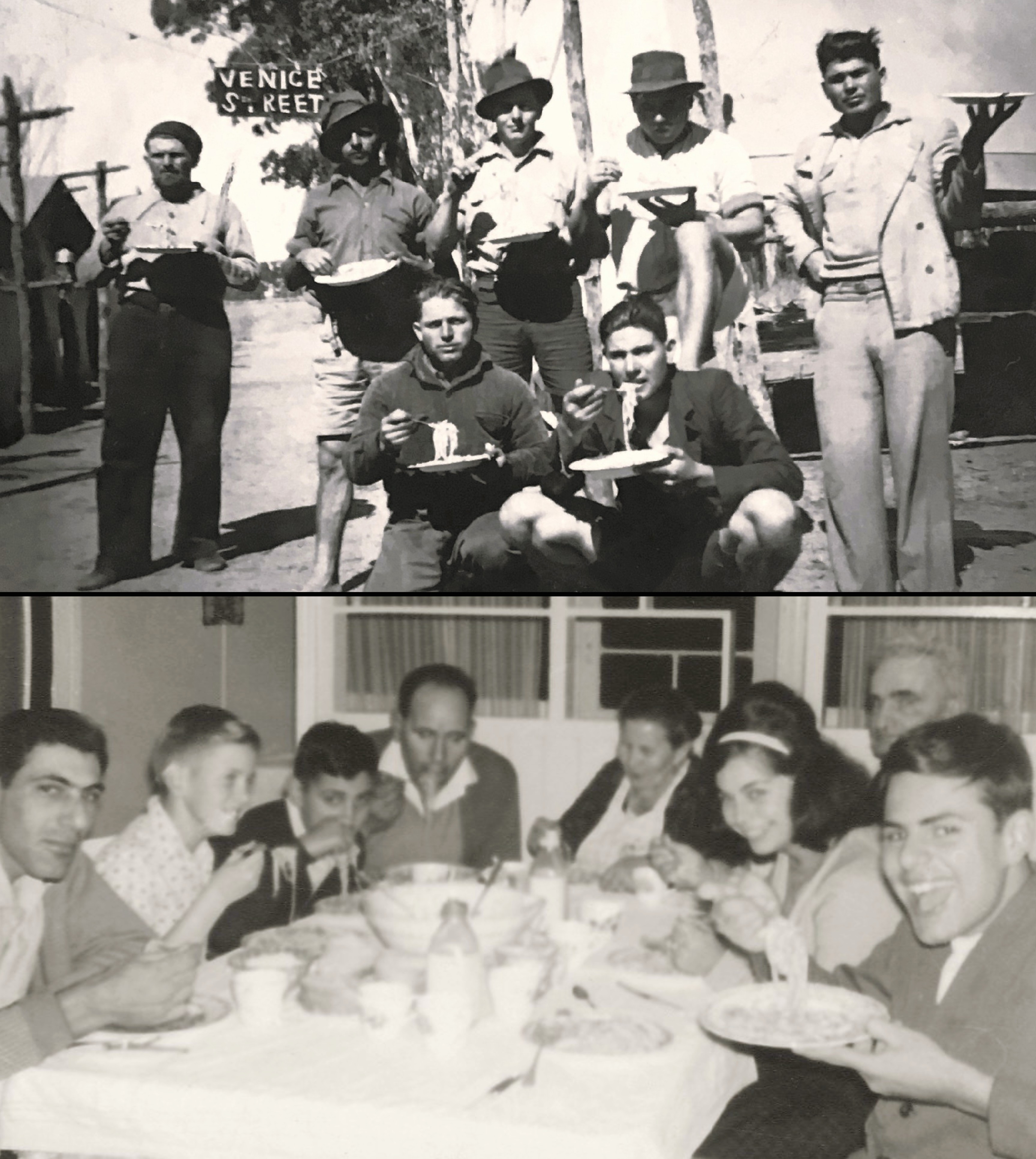
For privacy, I won’t say who contacted me but I’m so grateful as she also sent me photos I’ve never seen before from inside the camp, including of ‘Venice Street’ between their tents and also of Nonno Anni!
Then it struck me, here’s Nonno Anni aged nineteen, bottom right in the first photo holding up a forkful of pasta, and two decades on, there’s Dad aged nineteen, same position bottom right, also holding up pasta for a photo. (The same photo that’s on the cover of Mezza Italiana.)
What a difference twenty years after the camp made for Nonno Anni – married, a family, a house, a milk bar and fruit shop. And what a gift to discover more internment camp photos all these years after I wrote about it in, Joe’s Fruit Shop and Milk Bar. (It remains a mystery why or how photos were even taken inside the camp since by 1942 in WW2 cameras were confiscated from Italians in Australia. It seems the guards likely took them.)
Truly, the absolute best thing about writing is hearing from all of you and your own connections with these stories. Thank you. I better get back to work as I’m deep in the next book but I just had to share with you this little bit of ‘serendipity with spaghetti’. 💛
 When I wrote about the secret internment camp at Western Creek in Joe’s Fruit Shop and Milk Bar, I thought that was the end of it. It took several years and almost a detective hunt to put together the information and I met many brick walls from authorities. Some refused to believe the camp that detained hundreds of innocent men during WW2 even existed, others conceded that records for such camps were often scant and, in the years afterward, destroyed. Or not kept at all. (These camps being relatively secret and hidden out in Queensland’s west in forest or bushland when official internment camps at places like Enoggera were full.)
 To me, it’s both remiss and insensitive that internees in Australia weren’t given some type of official apology like those in other countries were and, of course, for most it is too late now to hear one. Nonno Anni never bore any bitterness or ill will for his internment, he accepted it with grace as a factor of wartime, but I hope remembering what happened in this way gives back a little of what was lost.

 Zoë Boccabella