
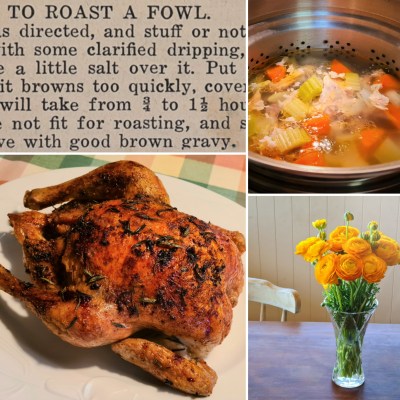
 ‘Gallina vecchia fa buon brodo’ – an old hen makes good broth as the Italian saying goes, for it brings age and experience in the magic of food being medicine and comfort. (A good quality, free range chicken who’s led a pleasant, kind life in the outdoors and lived a bit longer is good too.) It’s been a while since I’ve roasted a whole chicken and made broth, something Granny Maddalena did as one of her remedies as the village witch. (Her chicken soup was said to cure her son, Elia from typhoid when a doctor couldn’t.)
Of course, Italians don’t follow written recipes but I was curious to find one for roast fowl with dripping in an Australian 1934 cookery book. My Italian-Australian version is somewhat different but simple with leaves of rosemary from the garden, olive oil, mountain pepper berries, lemon myrtle, saltbush and desert raisins sprinkled over top. What is left after the roast meat is eaten is all put in a pot with water and soffritto, that trio of carrots, onion and celery, simmered for hours then strained.
Whether as a clear soup or stock for risotto it is amazingly restorative – along with some cheery flowers on the kitchen table. For all of you, especially those who are finding times a challenge at present, wishing you a lovely day, the happiness of yellow flowers and good chicken soup. Zoe 💛 xx
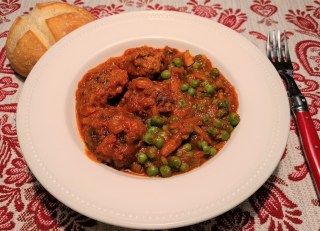
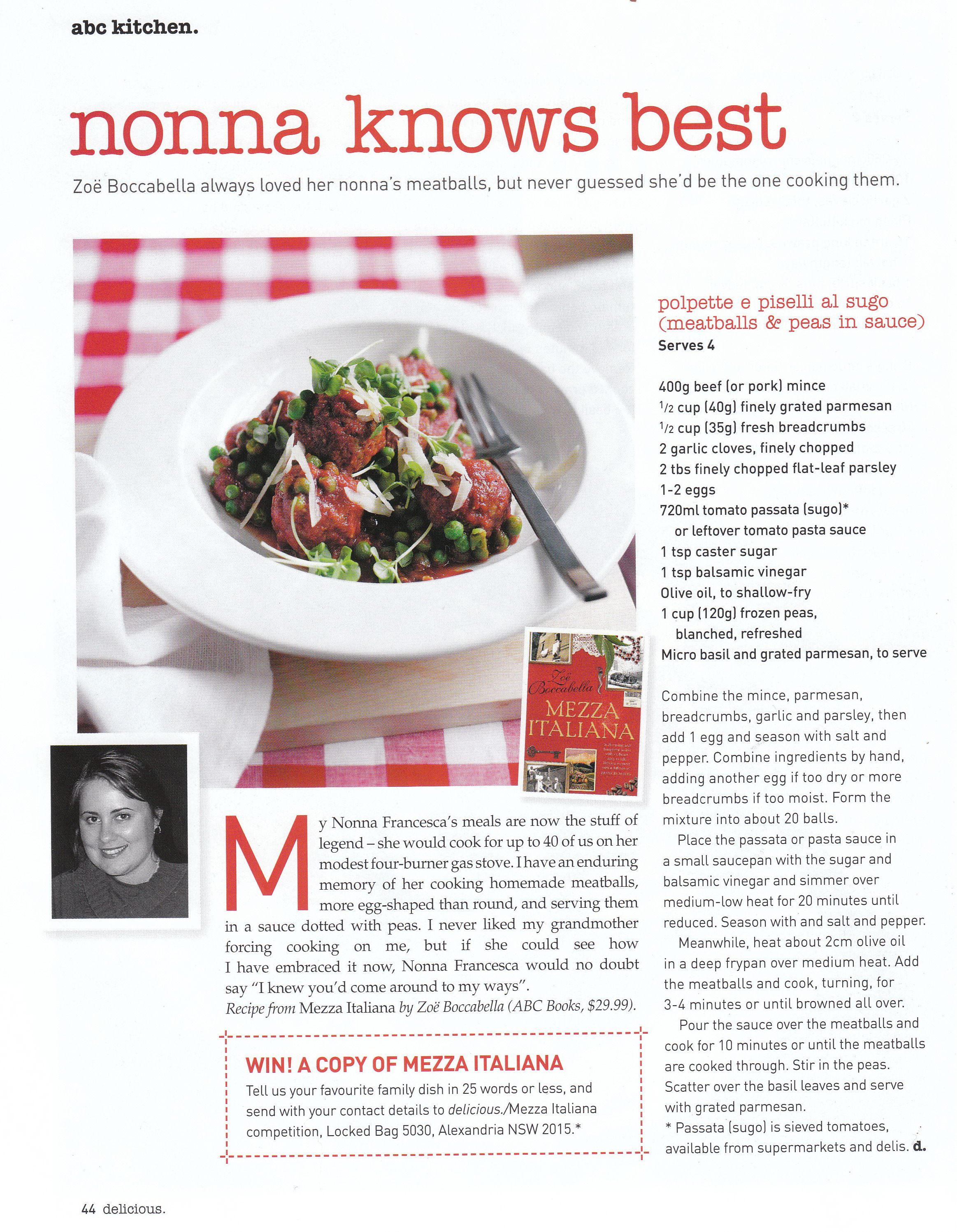
 Polpette and peas in gravy, such an ‘Australitaliano’ combination – meatballs and peas in tomato sauce. Comfort food at its best. Nanna Francesca cooked this a lot (and when I was a kid, I found it a bit confusing that, being southern Italian, she called the tomato passata or sugo – ‘gravy’ considering my Australian Mum called gravy a deep-brown liquid accompanying a roast). Nanna Francesca would’ve been 95 today so it seems fitting to cook her polpette e piselli in gravy. We always celebrated her birthday on the 12th, the day she was born though the official date on her birth certificate was the 19th (lodged late as her parents argued who to name her after). Tradition won, as did her father, and being the first-born, Francesca was named after her paternal grandmother.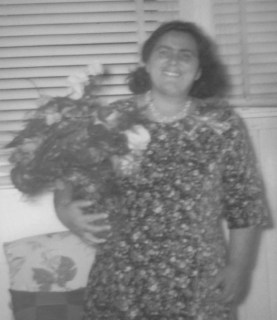

 January 6th – Epiphany and the visit of la Befana, the wise men and women and marking the end of 12 days of Christmas. Whatever your beliefs, ‘epiphany’ is a lovely word with connotations of insight, discovery and a sudden understanding of something that is very important to you.
 In another Italian tradition… after learning about Abruzzese pizze fritte – its song and secret recipe handed down from mother-to-daughter (and sometimes son), but only on New Year’s Eve – Roger and I decided to end the year by cooking these.
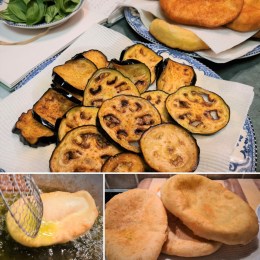 Except, not knowing all of the secret recipe that contains anise and saffron, we decided to make our own version with toppings of basil pesto and crispy prosciutto, bufala di mozzarella, melanzane, tomato and basilico leaves from the garden. The fritte were also cooked in a wok and finished in the oven, which worked well, but isn’t quite traditional! Yet they were delicious and I loved thinking about their connection with Abruzzo.
 If it otherwise means not following a tradition at all because it’s too hard or the recipe is lost, perhaps it’s okay to adapt them at times. For that becomes part of our history too, all of us adapting here and there along the way over the years, while still understanding what is important overall. Tanti auguri di felicità per l’Epifania! Many wishes of happiness for Epiphany! xxx

 Zoë Boccabella