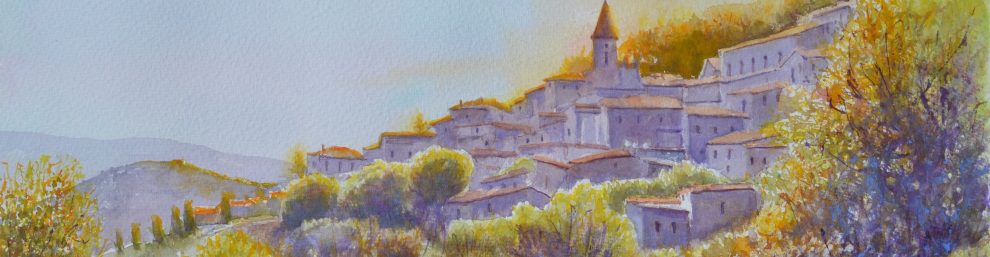

 January 6th – Epiphany and the visit of la Befana, the wise men and women and marking the end of 12 days of Christmas. Whatever your beliefs, ‘epiphany’ is a lovely word with connotations of insight, discovery and a sudden understanding of something that is very important to you.
Am pleased to say that la Befana brought my nephew some little toys rather than coal last night and also that she managed to find her way from Italy to Australia!
 In another Italian tradition… after learning about Abruzzese pizze fritte – its song and secret recipe handed down from mother-to-daughter (and sometimes son), but only on New Year’s Eve – Roger and I decided to end the year by cooking these.
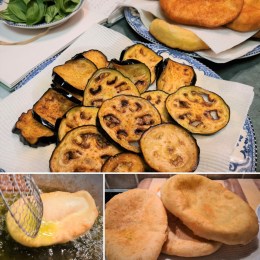 Except, not knowing all of the secret recipe that contains anise and saffron, we decided to make our own version with toppings of basil pesto and crispy prosciutto, bufala di mozzarella, melanzane, tomato and basilico leaves from the garden. The fritte were also cooked in a wok and finished in the oven, which worked well, but isn’t quite traditional! Yet they were delicious and I loved thinking about their connection with Abruzzo.

Wise women and men arrive on Epiphany. Fresco painted in 1303 by Giotto and his team of painters, Scrovegni Chapel, Padua, Veneto Italy.
And thinking about this today, I guess I had an epiphany of sorts that it doesn’t matter if something sometimes isn’t ‘perfectly traditional’. The fact I’ve grown up on the other side of the world from the Italy of my ancestors and still treasure the centuries-old traditions and recipes is still expressing a love and honour for them, the past and Italia.  If it otherwise means not following a tradition at all because it’s too hard or the recipe is lost, perhaps it’s okay to adapt them at times. For that becomes part of our history too, all of us adapting here and there along the way over the years, while still understanding what is important overall. Tanti auguri di felicità per l’Epifania! Many wishes of happiness for Epiphany! xxx
 When we cook the same dishes that our ancestors cooked it connects us to them, to our history and it also brings us back to something within ourselves that we mightn’t have thought of for some time or something we hadn’t yet discovered. Just the aroma of a dish cooking can release a trigger of deep memories that lets things rise up and take shape in us.
 The maccheroni Calabrese (pasta rolled on a knitting needle for its shape) has a richer red sauce with melanzane and chillies that Francesca’s town of Palmi is known for. And the chitarra pasta has bitter, wild greens added to the passata, inspired by Maddalena walking hillsides near Fossa picking wild greens into her upturned apron and taking them back to cook with. It also has pecorino cheese on top because that part of Abruzzo is known for its sheep.

 Zoë Boccabella