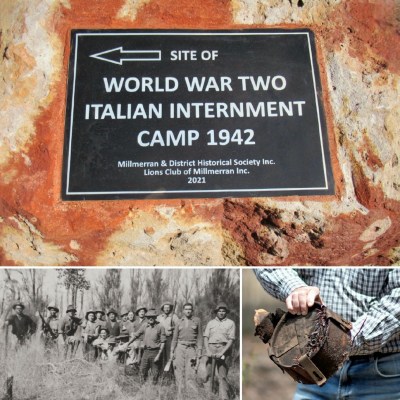
 A memorial stone and plaque are now in place at the site of the secret internment camp at Western Creek. It’s been quite a twisting trail to get to this point – from writing about my grandfather being an internee there in Joe’s Fruit Shop and Milk Bar, after years of research and almost a detective hunt in putting together the information and many brick walls from authorities, some refusing to believe the camp that detained hundreds of innocent men during WW2 even existed (despite photographs and other clues).
Then there was the unexpected letter I received from Cecil Gibson, a Millmerran local who’d read my book, and who, together with other members of the Millmerran Museum and Historical Society, sought to also honour this, until then, mostly unknown local history. As I said, it’s been a twisting trail, especially in pinpointing the exact site, uncovering remnants of decades old testimony and even discovering the odd, old WW2 land mine left behind in the area (since cleared)!
I’m so pleased this has all come about, most of all for the young men interned, the army guards who treated them with respect and the women and children left to fend for themselves, many on farms, who did it tough in the absence of their men and workers.
Original post… Hidden history at Western Creek
 When I wrote about the secret internment camp at Western Creek in Joe’s Fruit Shop and Milk Bar, I thought that was the end of it. It took several years and almost a detective hunt to put together the information and I met many brick walls from authorities. Some refused to believe the camp that detained hundreds of innocent men during WW2 even existed, others conceded that records for such camps were often scant and, in the years afterward, destroyed. Or not kept at all. (These camps being relatively secret and hidden out in Queensland’s west in forest or bushland when official internment camps at places like Enoggera were full.)
 To me, it’s both remiss and insensitive that internees in Australia weren’t given some type of official apology like those in other countries were and, of course, for most it is too late now to hear one. Nonno Anni never bore any bitterness or ill will for his internment, he accepted it with grace as a factor of wartime, but I hope remembering what happened in this way gives back a little of what was lost.
 Italian internees at the ‘secret’ Western Creek internment camp in 1942. My grandfather, Annibale (far right, standing) was 18 years old and working as a farmhand at Applethorpe when he was interned.

 Zoë Boccabella